It belongs to the quiet but consequential shifts within Muslim practice that actions originally understood as ʿIbādah (conscious acts of worship) are gradually reduced to mere habit or social convention. The visiting of the sick (ʿiyādat al-marīḍ, the visitation of those who are ill) is a striking example.
What today often takes place out of politeness, family pressure, or cultural expectation is in truth an act of considerable theological depth and spiritual weight. Rediscovering this dimension is not an incidental matter; it forms part of the revival of the Sunnah itself.
The Place of Visiting the Sick within the Islamic Order
Islam understands the community of believers not as a loose assembly of autonomous individuals, but as a fabric of mutual rights and duties. The Prophet ﷺ said:
حَقُّ الْمُسْلِمِ عَلَى الْمُسْلِمِ خَمْسٌ: رَدُّ السَّلاَمِ، وَعِيَادَةُ الْمَرِيضِ، وَاتِّبَاعُ الْجَنَائِزِ، وَإِجَابَةُ الدَّعْوَةِ، وَتَشْمِيتُ الْعَاطِسِ
The rights of a Muslim upon another Muslim are five: returning the greeting of peace, visiting the sick, following funeral processions, accepting invitations, and responding to the one who sneezes.
Sahih al-Bukhari 1240 and Sahih Muslim 2162a (muttafaq ʿalayh)
Visiting the sick is therefore not merely recommended conduct (mandūb, an action that earns reward when performed), but part of a normative social order. Illness in Islam is not privatised; it activates an obligation upon the community.
The Vertical Dimension: When the Visit Is to Allāh
One of the most profound statements on this subject is found in a ḥadīth qudsī (a sacred narration in which the Prophet ﷺ relays the words of Allāh):
حَدَّثَنِي مُحَمَّدُ بْنُ حَاتِمِ بْنِ مَيْمُونٍ، حَدَّثَنَا بَهْزٌ، حَدَّثَنَا حَمَّادُ بْنُ سَلَمَةَ، عَنْ ثَابِتٍ، عَنْ أَبِي رَافِعٍ، عَنْ أَبِي هُرَيْرَةَ، قَالَ قَالَ رَسُولُ اللَّهِ صلى الله عليه وسلم: «إِنَّ اللَّهَ عَزَّ وَجَلَّ يَقُولُ يَوْمَ الْقِيَامَةِ: يَا ابْنَ آدَمَ مَرِضْتُ فَلَمْ تَعُدْنِي. قَالَ: يَا رَبِّ كَيْفَ أَعُودُكَ وَأَنْتَ رَبُّ الْعَالَمِينَ؟ قَالَ: أَمَا عَلِمْتَ أَنَّ عَبْدِي فُلاَنًا مَرِضَ فَلَمْ تَعُدْهُ؟ أَمَا عَلِمْتَ أَنَّكَ لَوْ عُدْتَهُ لَوَجَدْتَنِي عِنْدَهُ؟ يَا ابْنَ آدَمَ اسْتَطْعَمْتُكَ فَلَمْ تُطْعِمْنِي. قَالَ: يَا رَبِّ وَكَيْفَ أُطْعِمُكَ وَأَنْتَ رَبُّ الْعَالَمِينَ؟ قَالَ: أَمَا عَلِمْتَ أَنَّهُ اسْتَطْعَمَكَ عَبْدِي فُلاَنٌ فَلَمْ تُطْعِمْهُ؟ أَمَا عَلِمْتَ أَنَّكَ لَوْ أَطْعَمْتَهُ لَوَجَدْتَ ذَلِكَ عِنْدِي؟ يَا ابْنَ آدَمَ اسْتَسْقَيْتُكَ فَلَمْ تَسْقِنِي. قَالَ: يَا رَبِّ كَيْفَ أَسْقِيكَ وَأَنْتَ رَبُّ الْعَالَمِينَ؟ قَالَ: اسْتَسْقَاكَ عَبْدِي فُلاَنٌ فَلَمْ تَسْقِهِ، أَمَا إِنَّكَ لَوْ سَقَيْتَهُ وَجَدْتَ ذَلِكَ عِنْدِي».
Verily, Allah, the Exalted and Glorious, will say on the Day of Resurrection: 'O son of Adam, I was sick but you did not visit Me.' He will say: 'O my Lord, how could I visit You when You are the Lord of the worlds?' He will say: 'Did you not know that such and such a servant of Mine was sick, and you did not visit him? Did you not know that had you visited him, you would have found Me by his side? O son of Adam, I asked food from you but you did not feed Me.' He will say: 'My Lord, how could I feed You when You are the Lord of the worlds?' He will say: 'Did you not know that such and such a servant of Mine asked food from you, and you did not feed him? Did you not know that had you fed him, you would have found that with Me? O son of Adam, I asked drink from you but you did not give Me to drink.' He will say: 'My Lord, how could I give You to drink when You are the Lord of the worlds?' He will say: 'Such and such a servant of Mine asked you for a drink, and you did not give him to drink; had you given him to drink, you would have found that with Me.'
Sahih Muslim 2569, Book 45, Hadith 54
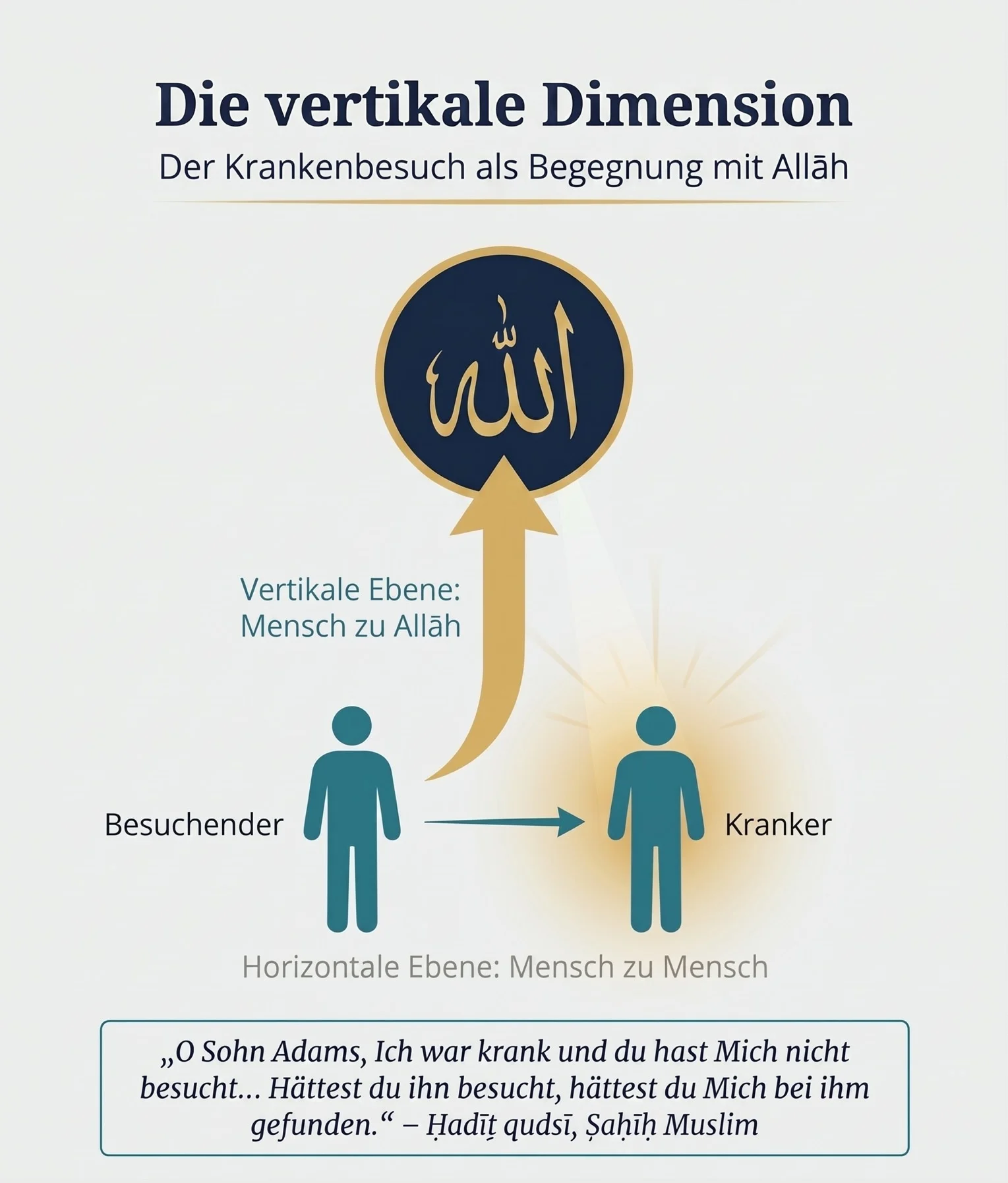
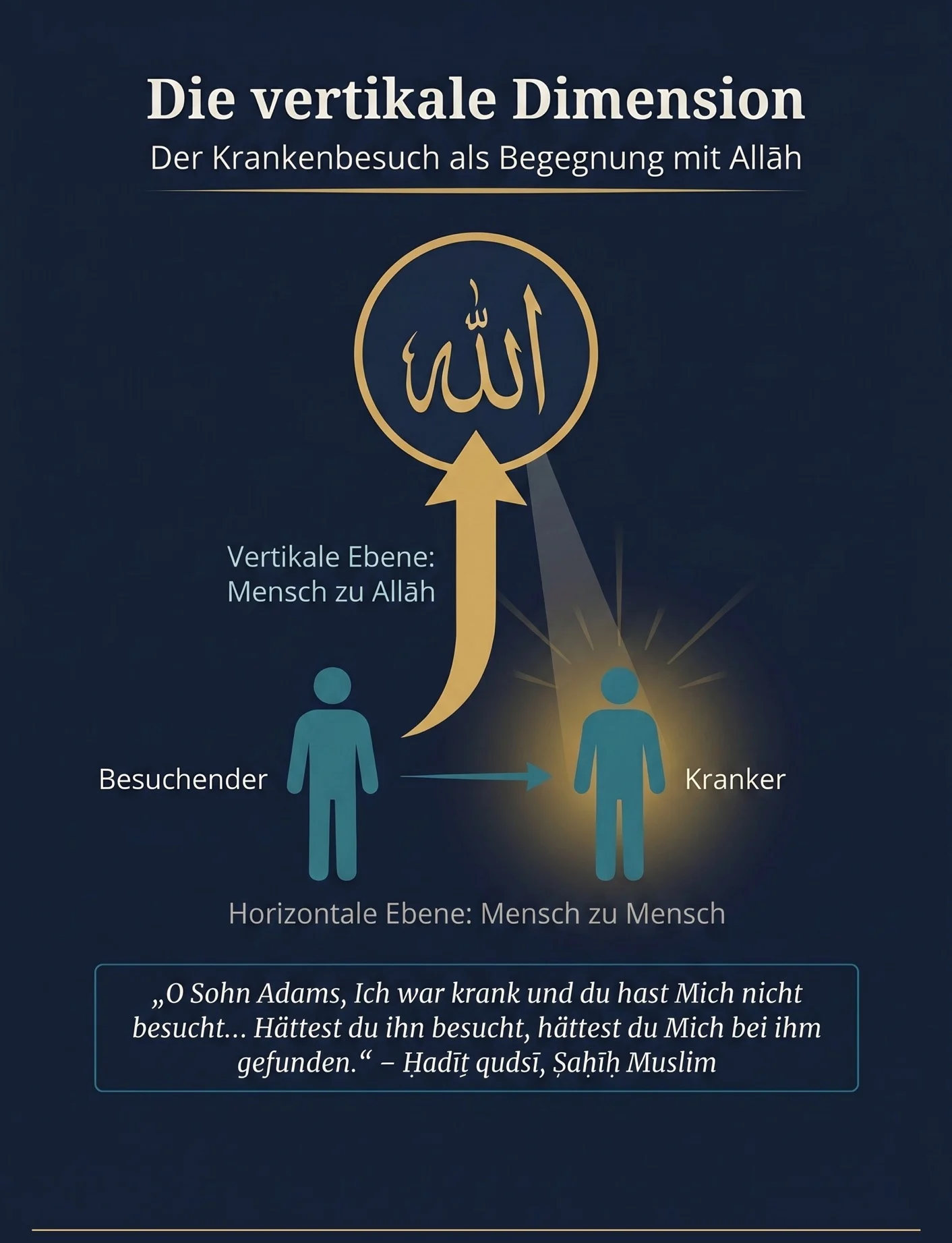
This statement lifts the visiting of the sick out of the purely interpersonal sphere. The sick person becomes a site of divine nearness. Whoever visits them enters, in a manner befitting the visitor, into proximity with Allāh.
A foundational principle is at work here. Islam transforms social actions into acts of worship when they are carried out with the right intention and the right awareness.
The Unseen Companionship: The Angels and the Reward
The Prophet ﷺ said:
مَا مِنْ مُسْلِمٍ يَعُودُ مُسْلِمًا غُدْوَةً إِلاَّ صَلَّى عَلَيْهِ سَبْعُونَ أَلْفَ مَلَكٍ حَتَّى يُمْسِيَ وَإِنْ عَادَهُ عَشِيَّةً إِلاَّ صَلَّى عَلَيْهِ سَبْعُونَ أَلْفَ مَلَكٍ حَتَّى يُصْبِحَ وَكَانَ لَهُ خَرِيفٌ فِي الْجَنَّةِ
No Muslim visits (the sick) Muslims in the morning, except that seventy thousand angels send Salat upon him until the evening, and he does not visit at night except that seventy thousand angels send Salat upon him until the morning, and there will be a garden for him in Paradise.
Jami` at-Tirmidhi 969, Book 10, Hadith 5
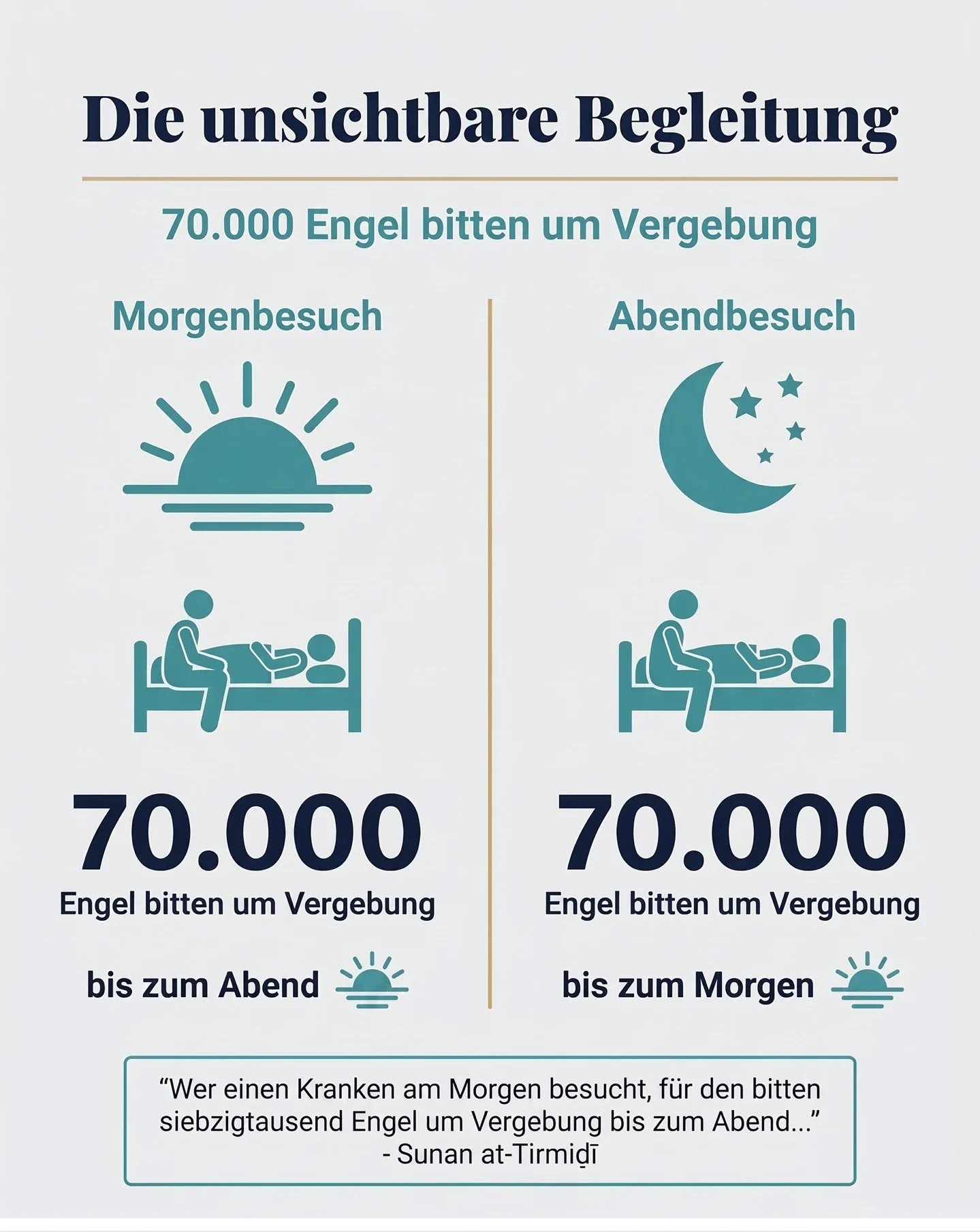
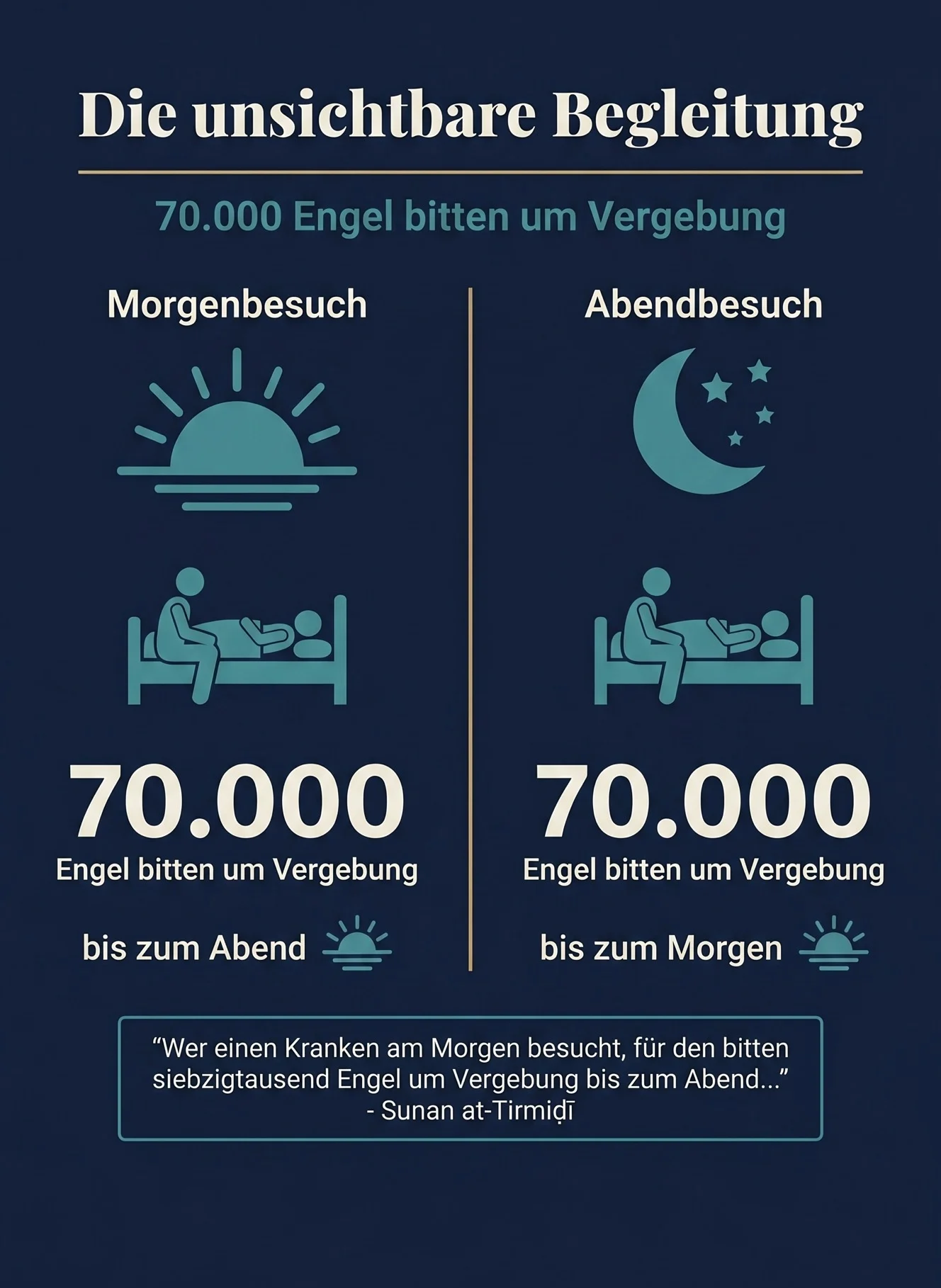
This narration opens up a perspective that has largely been lost in modern thought: actions are not confined to their visible effects but are embedded within a metaphysical order.
Visiting the sick is therefore not only consolation for the patient; it is also a means of the visitor’s own purification.
Illness as a State of Spiritual Significance
Islam does not understand illness as a mere defect of the body. The Prophet ﷺ said:
عَنْ عَبْدِ اللَّهِ قَالَ: دَخَلْتُ عَلَى رَسُولِ اللَّهِ ﷺ وَهْوَ يُوعَكُ، فَقُلْتُ: يَا رَسُولَ اللَّهِ، إِنَّكَ تُوعَكُ وَعْكًا شَدِيدًا. قَالَ: أَجَلْ، إِنِّي أُوعَكُ كَمَا يُوعَكُ رَجُلَانِ مِنْكُمْ. قُلْتُ: ذَلِكَ أَنَّ لَكَ أَجْرَيْنِ؟ قَالَ: أَجَلْ، ذَلِكَ كَذَلِكَ. مَا مِنْ مُسْلِمٍ يُصِيبُهُ أَذًى، شَوْكَةٌ فَمَا فَوْقَهَا، إِلَّا كَفَّرَ اللَّهُ بِهَا سَيِّئَاتِهِ، كَمَا تَحُطُّ الشَّجَرَةُ وَرَقَهَا.
Narrated ʿAbdullāh (ibn Masʿūd): I visited the Messenger of Allāh ﷺ while he was suffering from a high fever. I said: "O Messenger of Allāh, you have a very high fever." He said: "Yes, I have a fever as much as two men of you have." I said: "Is it because you will have a double reward?" He said: "Yes, it is so. No Muslim is afflicted with any harm, even if it were the prick of a thorn, but that Allāh expiates his sins because of that, as a tree sheds its leaves."
Sahih al-Bukhari 5648, Book 75 (Book of Patients), Hadith 8
The sick person is therefore not only in need of help; they are at the same time the bearer of a particular divine attention, in the form of purification and trial.
This also alters the perspective of the visitor.
They encounter not only one who suffers, but a human being in a state of spiritual concentration.
The Revival of a Neglected Sunnah
Many Sunan have not vanished entirely over time, but they have been emptied of their meaning. This is precisely where the concept of iḥyāʾ as-sunnah (the revival of the Sunnah, the restoration not only of form but of inner meaning) takes hold.
The Prophet ﷺ taught, in essence, that whoever revives a neglected Sunnah receives the reward for it as well as the reward of those who follow it.
In many contemporary contexts, visiting the sick belongs precisely to this category.
It still exists, but often without awareness, without intention, without spiritual depth.
The Sunnah: Adab and Akhlāq in Visiting the Sick
The Sunnah specifies not only the act itself, but also the manner of its performance.
The visit should be light, not burdensome. The Prophet ﷺ did not detain the sick at length. The focus rests on mercy, not on social self-presentation.
Among the words transmitted from him are:
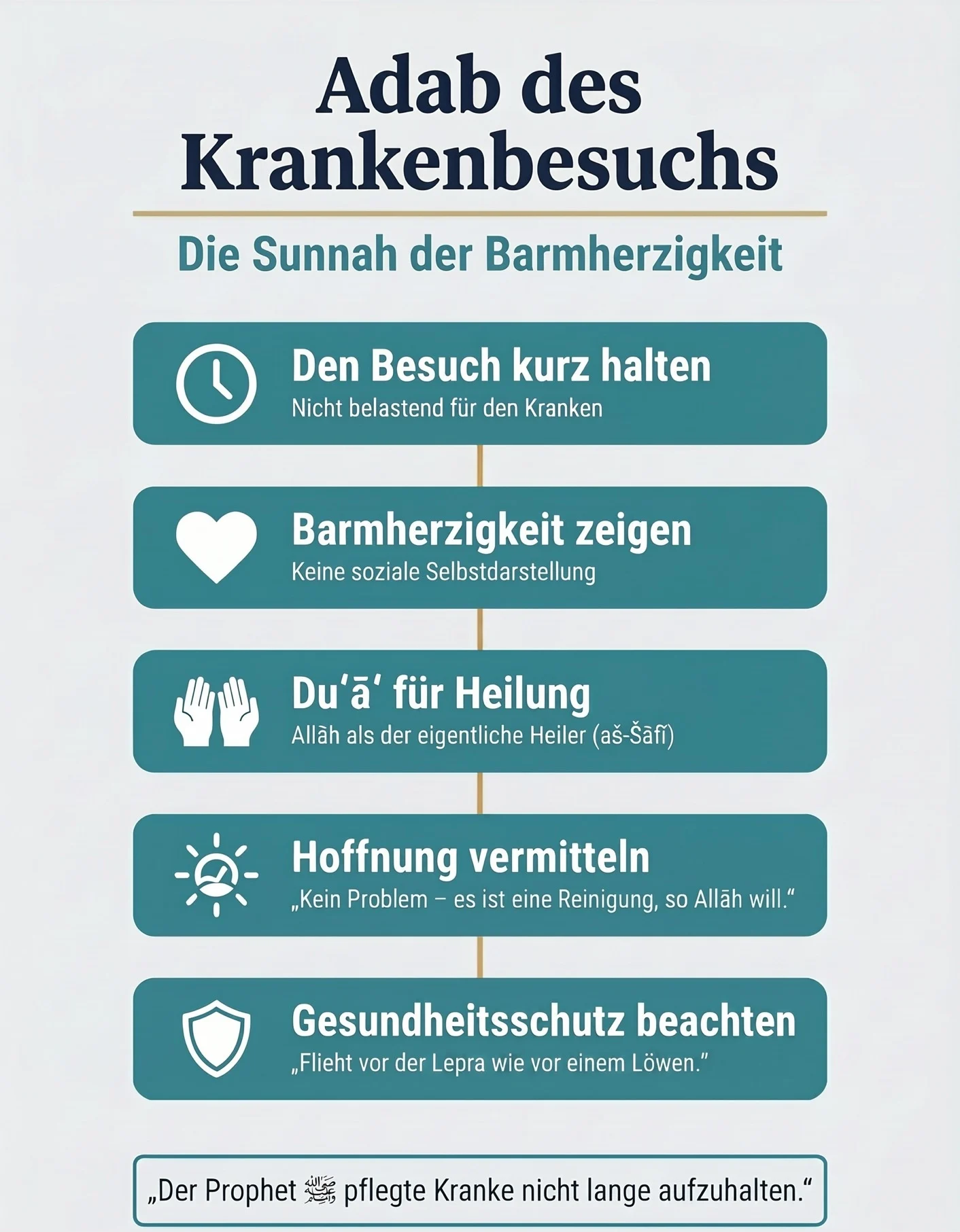
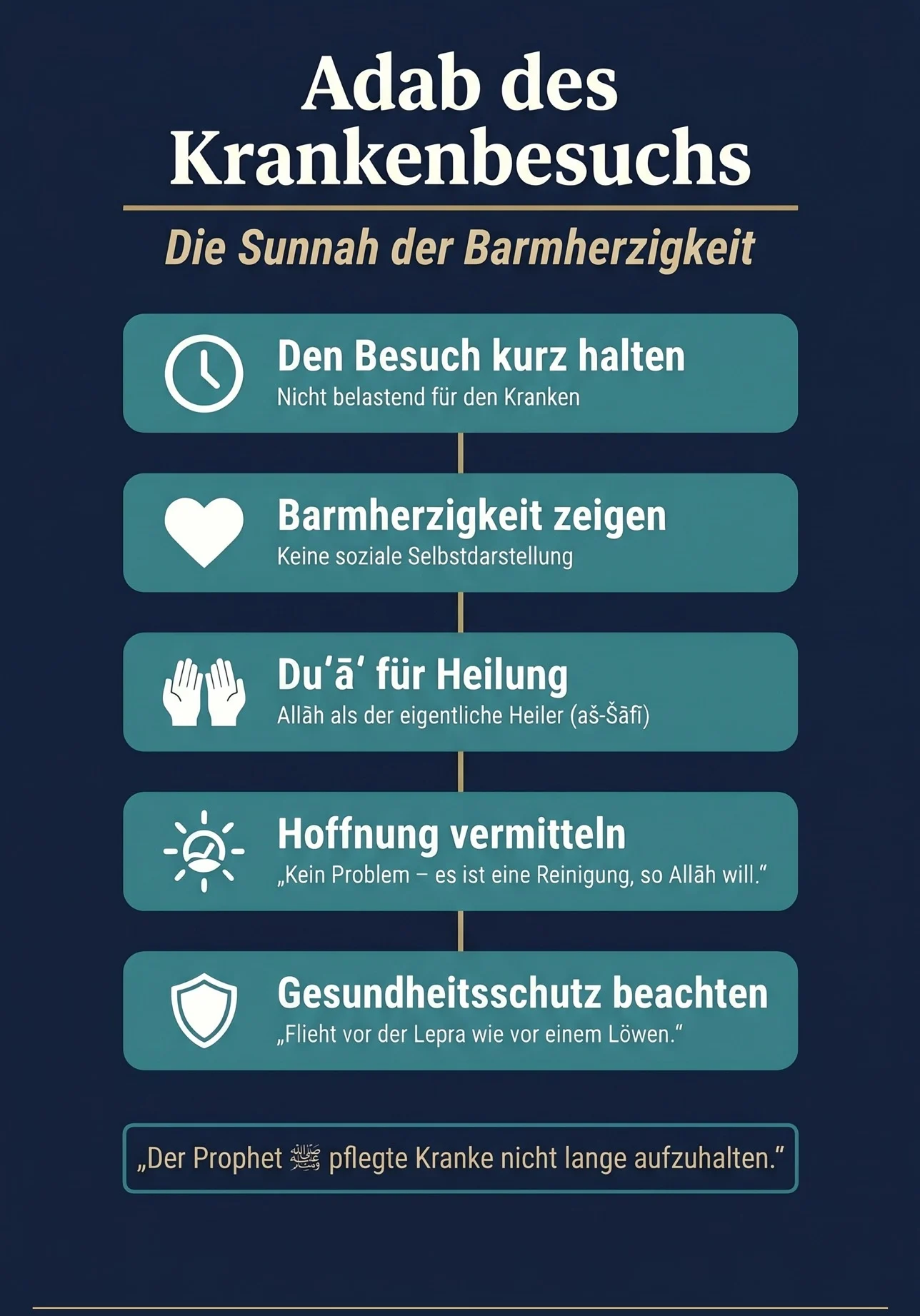
عَنِ ابْنِ عَبَّاسٍ رَضِيَ اللَّهُ عَنْهُمَا، أَنَّ النَّبِيَّ ﷺ دَخَلَ عَلَى أَعْرَابِيٍّ يَعُودُهُ، وَكَانَ النَّبِيُّ ﷺ إِذَا دَخَلَ عَلَى مَرِيضٍ يَعُودُهُ فَقَالَ لَهُ: «لَا بَأْسَ، طَهُورٌ إِنْ شَاءَ اللَّهُ».
Narrated Ibn ʿAbbās (may Allah be pleased with them both): The Prophet ﷺ went to visit a sick bedouin. Whenever the Prophet ﷺ went to a patient, he used to say to him: «Lā baʾs, ṭahūr in shāʾa Allāh» – «No harm; [it is] a purification, if Allah wills.»
Sahih al-Bukhari 5656, Book 75 (Kitāb al-Marḍā / Book of Patients), Hadith 16 — Chapter: To visit a Bedouin (https://sunnah.com/bukhari:5656)
This shows a balance. Hope is conveyed, but without the presumption of knowing the outcome. Absolute pronouncements about cure run counter to a humble posture before the divine decree.
At the same time, the Prophet ﷺ taught specific supplications for healing, in which Allāh is acknowledged as the true Healer (aš-Šāfī, the One who restores).
A further central aspect is the safeguarding of health. The Prophet ﷺ said:
إِذَا سَمِعْتُمْ بِالطَّاعُونِ بِأَرْضٍ فَلَا تَدْخُلُوهَا، وَإِذَا وَقَعَ بِأَرْضٍ وَأَنْتُمْ بِهَا فَلَا تَخْرُجُوا مِنْهَا.
If you hear of an outbreak of plague in a land, do not enter it; but if the plague breaks out in a place while you are in it, do not leave that place.
Sahih al-Bukhari 5728, Book 76 (Medicine), Hadith 43; parallel Sahih Muslim 2218
And:
وَفِرَّ مِنَ الْمَجْذُومِ كَمَا تَفِرُّ مِنَ الْأَسَدِ
Flee from the leper as you flee from a lion.
Sahih al-Bukhari 5707, Book 76 (Kitāb al-Ṭibb), Hadith 27
These statements show that Islam knows no naive spiritualisation that ignores material causes. Responsibility and prudence are integral to its ethics.
The Wider Horizon: Medical Staff and Family Members
If even the simple visit to a sick person is bound up with such reward, then a still greater dimension opens for those whose work brings them into continuous contact with the sick.
Physicians, nurses, and the family members who care for the ill stand in a position where their daily activity, undertaken with the right intention, can become a continuous ʿIbādah.
Here an often overlooked truth becomes visible. In Islam, profession and worship are not separate spheres; they pass over into one another.
From Meaning to Function: A Reading of the Present
The modern view frequently reduces illness to functional categories: diagnosis, treatment, efficiency. The human being becomes a “case,” the sick person a “patient.”
The Islamic approach, by contrast, places meaning above function:
- Illness as trial
- Illness as purification
- Illness as a site of divine nearness
- Visiting the sick as duty and worship
Forgetting this dimension inevitably means that the Sunnah of visiting the sick also loses its inner substance.
To Conclude
Visiting the sick is no peripheral act. It is a meeting point of Islamic anthropology, theology, and ethics. Within it the rights of Muslims toward one another, nearness to Allāh, the purification of the one who acts, and the dignity of the sick person are all bound together.
Its revival therefore means more than resuming a practice; it means restoring a portion of the Islamic order of reality.