Rank Is a Trial
When, after years of study, nights spent over books, and years in the clinic, a person finally receives a degree and takes up a first post, that is not a moment of arrival. It is the beginning of a trial.
Allah سبحانه وتعالى says in the Quran:
وَهُوَ ٱلَّذِى جَعَلَكُمْ خَلَـٰٓئِفَ ٱلْأَرْضِ وَرَفَعَ بَعْضَكُمْ فَوْقَ بَعْضٍ دَرَجَـٰتٍ لِّيَبْلُوَكُمْ فِى مَآ ءَاتَىٰكُمْ ۗ إِنَّ رَبَّكَ سَرِيعُ ٱلْعِقَابِ وَإِنَّهُۥ لَغَفُورٌ رَّحِيمٌۢ
And it is He who has made you successors upon the earth and has raised some of you above others in degrees [of rank] that He may try you through what He has given you.
Surah al-Anʿām 6:165 1
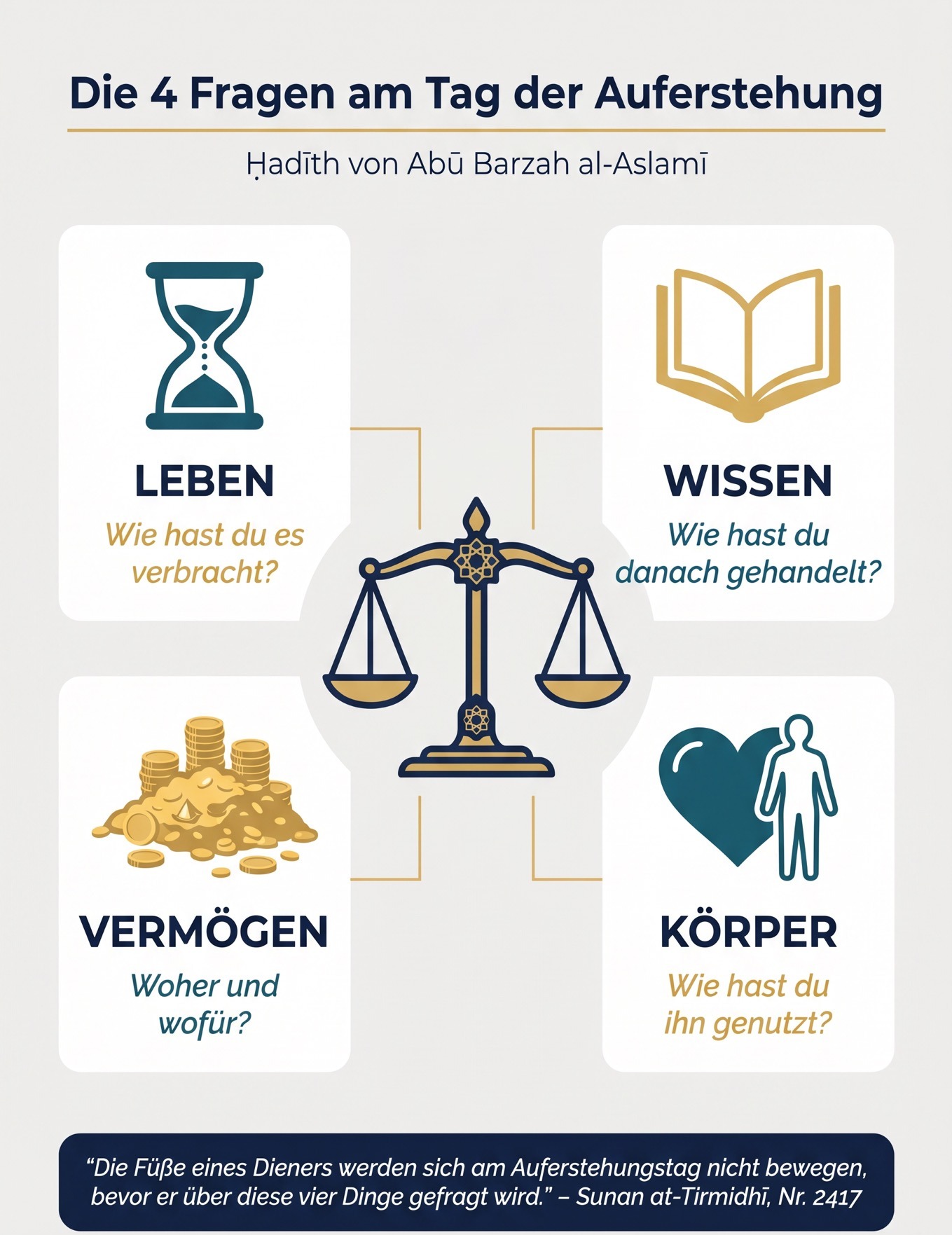
In Islamic thought, ranks are never merely honour. They are, first and foremost, a trial. Every gift, every Niʿma, comes with a question that must be answered on the Day of Judgement. The Prophet ﷺ formulated this, in a Ḥadīth narrated by Abū Barzah al-Aslamī and recorded by at-Tirmidhī, with a precision that gives one pause:
لَا تَزُولُ قَدَمَا عَبْدٍ يَوْمَ الْقِيَامَةِ حَتَّى يُسْأَلَ عَنْ عُمْرِهِ فِيمَا أَفْنَاهُ، وَعَنْ عِلْمِهِ فِيمَا فَعَلَ، وَعَنْ مَالِهِ مِنْ أَيْنَ اكْتَسَبَهُ وَفِيمَا أَنْفَقَهُ، وَعَنْ جِسْمِهِ فِيمَا أَبْلَاهُ.
The feet of a servant shall not move on the Day of Resurrection until he is asked about his life – how he spent it; about his knowledge – what he did with it; about his wealth – how he earned it and where he spent it; and about his body – how he used it.
Jami` at-Tirmidhi 2417 2
And Allah سبحانه وتعالى confirms in Sūrah at-Takāthur:
ثُمَّ لَتُسْـَٔلُنَّ يَوْمَئِذٍ عَنِ ٱلنَّعِيمِ
Then you will surely be asked that Day about pleasure.
Surah at-Takāthur 102:8 3
Knowledge is a Niʿma. Health is a Niʿma. The body is a Niʿma. And the medical profession unites all three in a single gift: the knowledge with which one has been equipped, the body one is called to serve, and the health one is permitted to guard, foster, and restore.
This is no light inheritance.
In Islamic History
Imām ash-Shāfiʿī (d. 204 AH), one of the four great Imāms of Fiqh, left two statements about medicine which together form a complete picture. The first is a distinction: “I know of no science, after that of the Ḥalāl and the Ḥarām, nobler than medicine”.4
The second is an admonition, and it still burns today: “But the Muslims have neglected a third of knowledge and left it to the Ahl al-Kitāb”.4
This statement comes from the ninth century, and it could just as well have been written today. Ash-Shāfiʿī also set the frame within which this responsibility is to be understood: “Knowledge is of two kinds: Fiqh for the Dīn, and medicine for the body. Do not live in a town that has no scholar to answer you concerning your Dīn, and no physician to give you counsel concerning your body”.4
Fiqh and Ṭibb. Two pillars, no hierarchy, no separation. Whoever lets one of them fall away builds on a foundation that bears weight but does not hold.
Imām ʿAlī ibn Abī Ṭālib (ʿa) condensed the physician’s duty into three terms that cannot be held apart: “Whoever practises medicine, let him fear God (Taqwā), let him give sincere counsel (Naṣīḥah), and let him strive in earnest (Ijtihād)”.5
In Islamic Law: The Collective Obligation
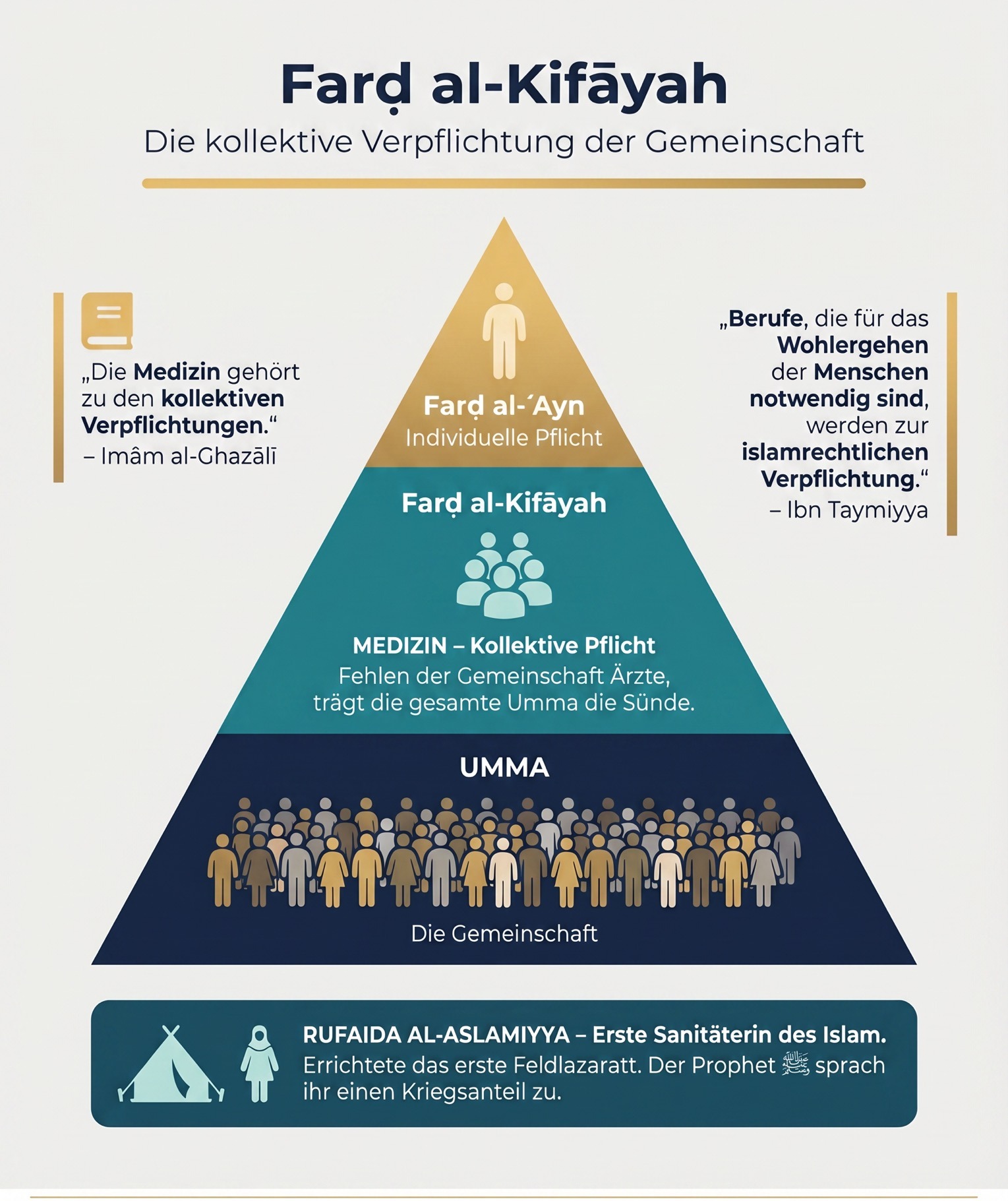
In his Iḥyāʾ ʿUlūm ad-Dīn, Imām al-Ghazālī, Ḥujjat al-Islām, classifies medicine expressly as Farḍ al-Kifāyah: a collective obligation of the community.6 The juristic claim behind this is sharp: where a Muslim society lacks a sufficient number of qualified physicians, the entire community bears the sin. Not only those who ought to have studied it. All.
Shaykh al-Islām Ibn Taymiyya formulates the same from the other side: “Professions that are necessary for the welfare of people, such as medicine, become a legal obligation”.7
The word become is decisive. This is no static duty; it grows with the need. Wherever society requires physicians, an obligation arises upon those capable of meeting that need.
And the Prophet ﷺ did not only establish this principle; he embodied it institutionally. When a physician was given to him as a gift, he did not keep him for himself but placed him at the disposal of all Muslims.8
The example of Rufaida al-Aslamiyya raḍiya llāhu ʿanhā, the first nurse and medic of Islam, deserves particular emphasis. In Medina she established the first field hospital in Islamic history, in the immediate vicinity of the Masjid an-Nabawī. The Prophet ﷺ personally ordered that all the wounded be brought to her tent. At the Battle of Khaybar he took her with the army and assigned her a share of the spoils equal to that of a combatant, as explicit recognition that providing medical care to society is a service on par with service on the battlefield.9 That it was a woman to whom this standing was granted is not a historical detail. It is a juristic statement on the place of women in healthcare and in society, one that still awaits its full realisation.
The Bimaristān, the Islamic hospital, was the institutional answer of this conviction at the communal level. The Manṣūrī hospital in Cairo treated all without charge, Muslim and non-Muslim alike, and was at once a place of teaching and of research. Not charity. A social obligation.10 The scholar Aasim I. Padela brings this to its juristic term: Ḥuqūq al-ʿIbād, the rights of the people, together with Farḍ al-Kifāyah form the Islamic basis for state-provided healthcare as duty, not as benefit.11
The Physician’s Ethos Toward Society and Self
From this foundation grows an ethos that reaches far beyond the consulting room.
Takāful, mutual solidarity, is the social principle that binds the physician to his community. The Prophet ﷺ explicitly praised the Ashʿariyūn, a Yemeni tribe around the Ṣaḥābī Abū Mūsā al-Ashʿarī, as being of his own people:
إِنَّ الأَشْعَرِيِّينَ إِذَا أَرْمَلُوا فِي الْغَزْوِ، أَوْ قَلَّ طَعَامُ عِيَالِهِمْ بِالْمَدِينَةِ جَمَعُوا مَا كَانَ عِنْدَهُمْ فِي ثَوْبٍ وَاحِدٍ، ثُمَّ اقْتَسَمُوهُ بَيْنَهُمْ فِي إِنَاءٍ وَاحِدٍ بِالسَّوِيَّةِ، فَهُمْ مِنِّي وَأَنَا مِنْهُمْ
When the Ashʿariyūn ran short of food on a military expedition, or the provisions of their families in Medina ran low, they would gather whatever they had in one cloth and then divide it equally among themselves in one vessel. They are of me, and I am of them.
Ṣaḥīḥ al-Bukhārī 2486 and Ṣaḥīḥ Muslim 2500 (muttafaq ʿalayh), narrated by Abū Mūsā al-Ashʿarī 12
Takāful does not mean that the physician surrenders himself. It means that he understands himself as part of a larger body whose health he shares responsibility for. The physician who withdraws into his own practice, who does not share his expertise, who avoids public debate on matters of health, acts against this principle.
Itqān, excellence as ʿIbāda, is the second demand. The Prophet ﷺ said:
إِنَّ اللَّهَ يُحِبُّ إِذَا عَمِلَ أَحَدُكُمْ عَمَلًا أَنْ يُتْقِنَهُ
Allah loves, when one of you does a deed, that he does it with excellence (itqān).
al-Bayhaqī, Shuʿab al-Īmān no. 4929; also Abū Yaʿlā (Musnad) and al-Ṭabarānī (al-Muʿjam al-Awsaṭ), narrated by ʿĀʾisha (r.a.) 13
Itqān in medicine means: not to stop learning once you are good enough; not to stagnate so long as you are not falling behind; but to press on as Sābiq, one who goes out ahead, of whom Allah سبحانه وتعالى says in Sūrah al-Wāqiʿah:
وَٱلسَّٰبِقُونَ ٱلسَّٰبِقُونَ أُو۟لَٰٓئِكَ ٱلْمُقَرَّبُونَ
And the forerunners, the forerunners – those are the ones brought near [to Allah].
Surah al-Wāqiʿa 56:10–11 14
Naṣīḥah and exemplary conduct close the circle. The physician’s counsel must not be confined to the technical and medical. The one who sees the human being in vulnerability, who is granted insight into lives that remain closed to others, carries the duty to speak when others fall silent and to warn when others look away. And he carries the duty to cultivate his own character, not as an end in itself, but because the physician, whether he wishes it or not, bears a role of example that he must live up to.
Today’s Reality: The Fracture of a Unity
What we witness today is not in the first place a shortage of knowledge. It is the fracture of a worldview.
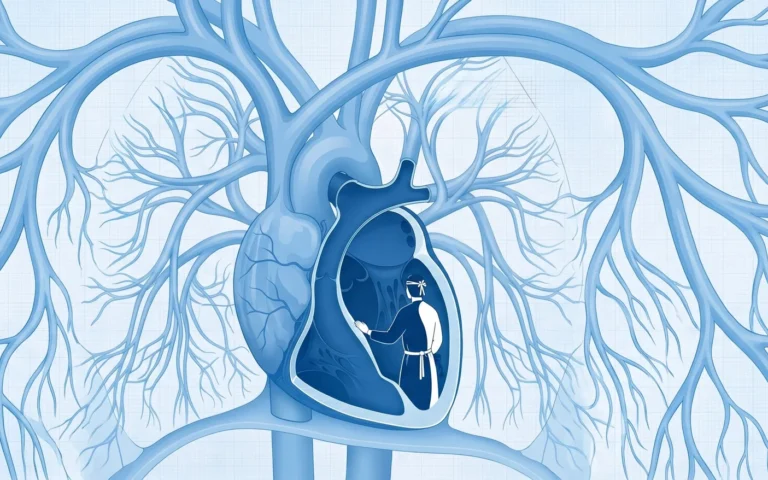
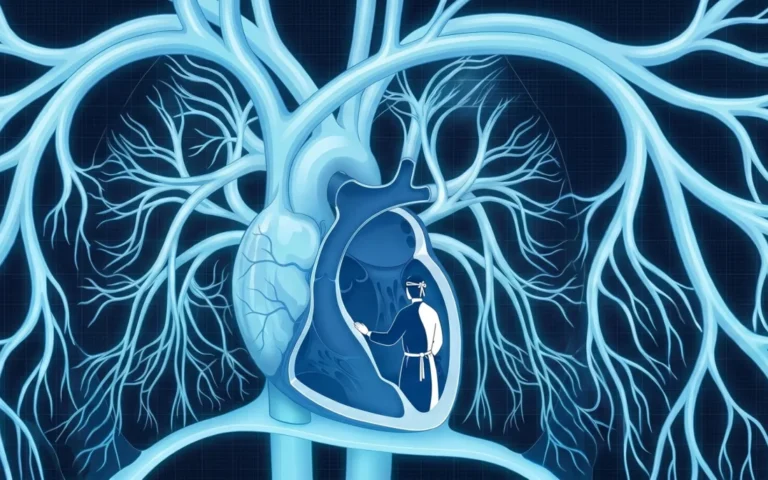
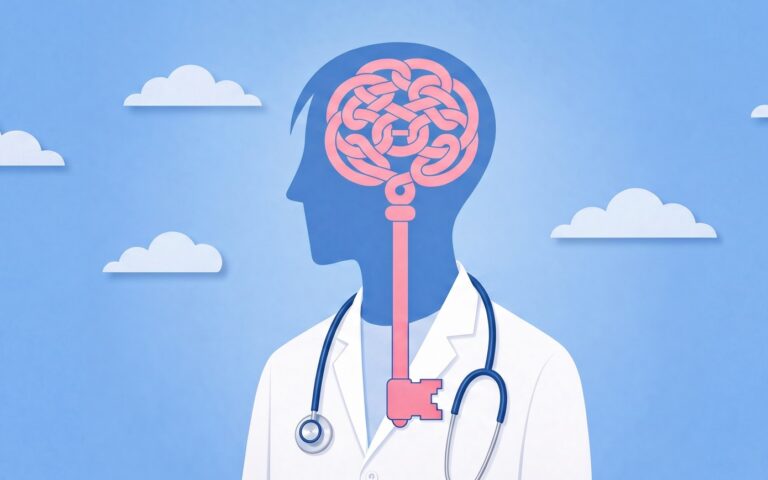
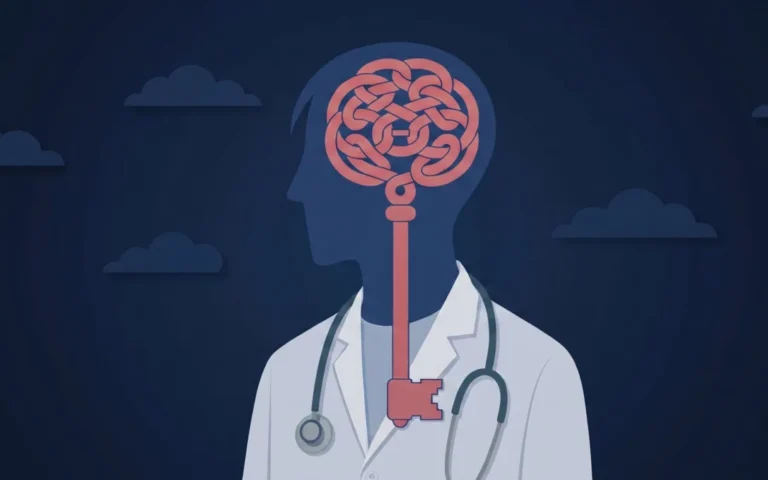
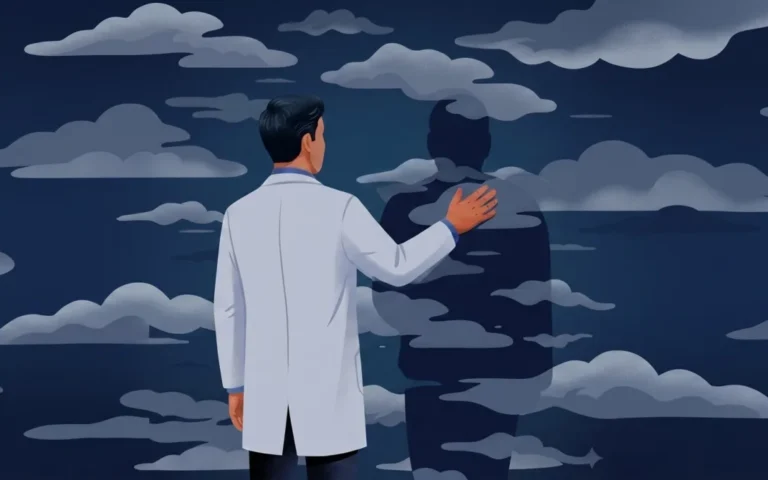
There is an image that makes this very concrete. When we arrive at work in the morning and put aside our everyday clothes, we often put aside something else with them. We put on the white coat, and with it a different self-understanding enters us: stress, time pressure, economisation, performance thinking. The patient as a case, the diagnosis as a code, the treatment as revenue. What we set aside with our clothes are, in this image, our Islamic values; what we put on are capitalist values that accompany us through the working day.
This is not a personal failing. It is the result of a worldview that has wrongly sundered two domains that belong together. Allah سبحانه وتعالى describes those who tear this unity apart in Sūrah al-Baqarah with unsparing clarity:
ٱلَّذِينَ يَنقُضُونَ عَهْدَ ٱللَّهِ مِنۢ بَعْدِ مِيثَٰقِهِۦ وَيَقْطَعُونَ مَآ أَمَرَ ٱللَّهُ بِهِۦٓ أَن يُوصَلَ وَيُفْسِدُونَ فِى ٱلْأَرْضِ ۚ أُو۟لَٰٓئِكَ هُمُ ٱلْخَٰسِرُونَ
Who break the covenant of Allah after contracting it and sever that which Allah has ordered to be joined and cause corruption on earth. It is those who are the losers.
Surah al-Baqara 2:27 15
The Arabic word yaqṭaʿūna, they sever, is an active rending, not a passive drifting apart. The separation of knowledge and Īmān is not an inevitable development. It is a decision that has been made; and a decision that can be undone.
The Western scientific tradition has elevated this process of separation to a method. The so-called two magisteria (natural science here, faith there) count in Western thought as an achievement of the Enlightenment. A physician who carries within himself both scientific expertise and Taqwā is regarded, in this worldview, as subjective, as religiously compromised, as unscientific. Yet this separation is no epistemic necessity. It is a philosophical pre-commitment; and Islam does not share it.
Islam does not know the separation of matter and spirit as the basic structure of reality. Knowledge is a single stream, flowing from Tawḥīd. Whoever recognises Allah’s order of creation in what he sees under the microscope, encounters at the bedside, and grasps in the biochemistry of life, is not a lesser scientist but a better one.
And it is precisely this image that Ibn Khaldūn summons from history in his Muqaddimah, as a quiet answer to the fracture we lament today: the most eminent physicians of the twelfth and thirteenth centuries in Syria and Cairo were at the same time Faqīhs, teachers in madrasas, and active in the great mosques of their time.16 Not technicians in a silo. Not divided men who put on the white coat in the morning and hang their Īmān on the hook. Rather Ḥakīms, who lived knowledge and worldview as one indivisible whole.
To restore this synthesis: that is what HAKIM seeks. Not as a nostalgic project. As a living necessity.