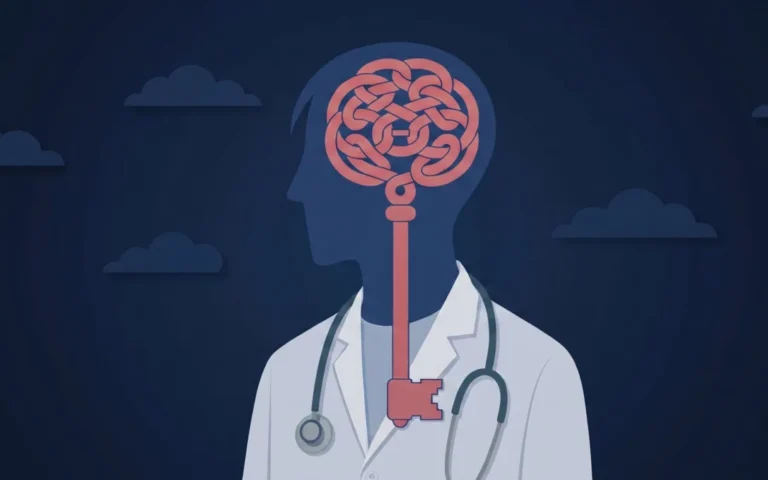
The case we all recognise
It is an ordinary Tuesday afternoon. The waiting room is full, the telephone keeps ringing, piles of lab results are stacked up, and three patients are pressing for a conversation at once. Then he walks in.
Perhaps it is the patient who asks the same question for the tenth time, though you have already answered him calmly several times. Or the patient whose body odour fills the examination room long after the consultation is over. Or the lady who arrives at every visit with a fresh list, handwritten on both sides of the page, and expects every item to be discussed. Or the young man who turns aggressive because he has waited twenty minutes. Or the mother who presents with her sick child, yet has not followed through on the last three recommendations herself.
And at some point, perhaps in the lunch break, perhaps in the corridor, perhaps in the team meeting, it happens. People talk. Someone makes a comment. A small, ironic, exhausted remark. A colleague nods. The nurse laughs briefly. And suddenly it is normal. The patient has become a case, a topic, a running joke in the interstices of everyday practice.
I do not write this to condemn. I write it because I know it. Because everyone who works in a healing profession knows it. And because it is precisely here that an honest question begins, one which every practitioner must put to themselves:
How do I actually see the patient?
As an added burden? As work that needs doing? As a billing code that can be claimed? As a source of revenue? As one of fifty items to be processed between eight and six?
Only those who answer this question honestly can begin to grasp the Islamic ethos of the doctor-patient relationship. For it begins precisely here.
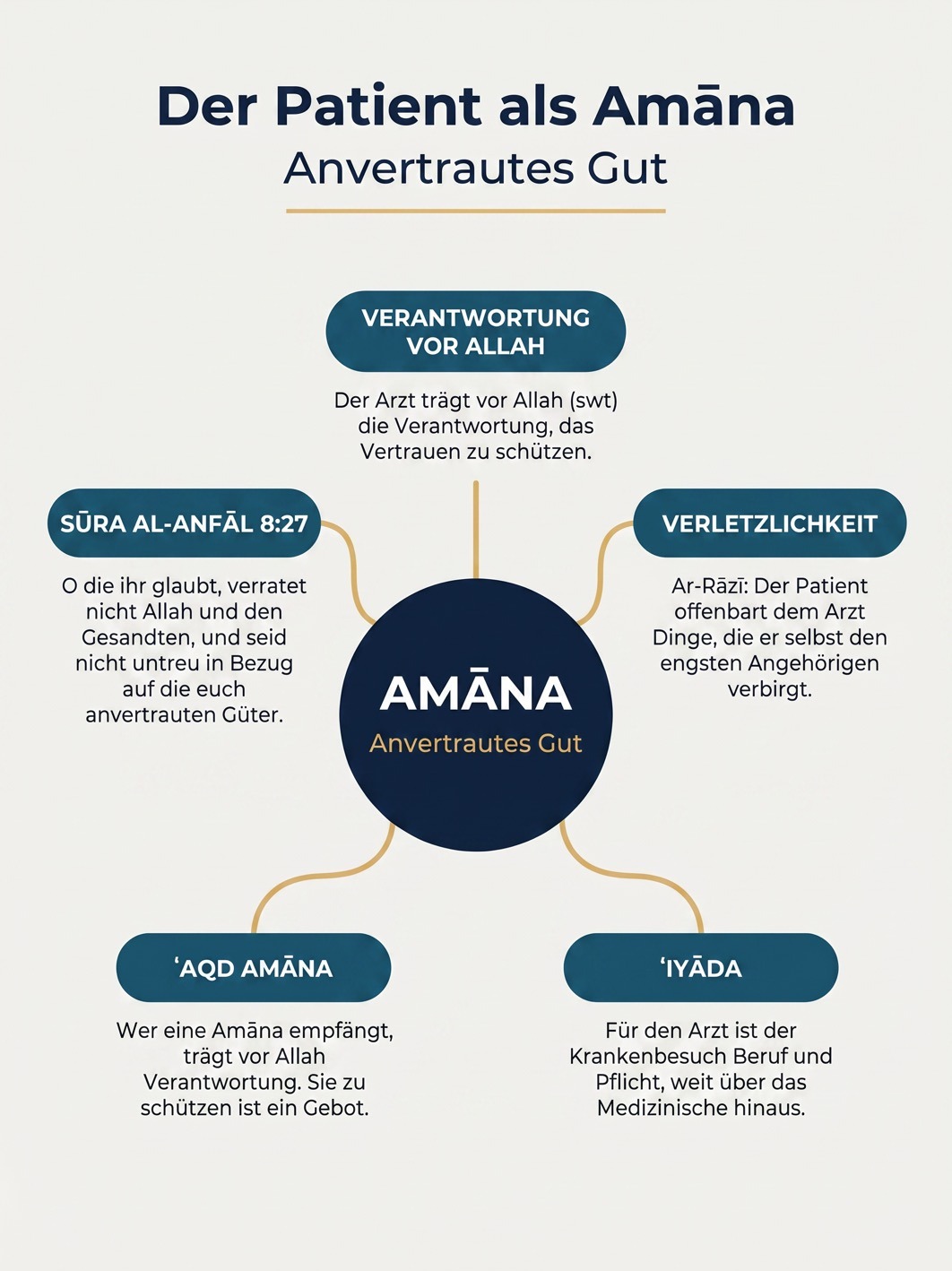
The patient as Amāna
In Islamic thought, every person who comes through the door and entrusts themselves to a physician holds a particular status: they are an Amāna, a sacred trust. This is no metaphor. It is a theological and juridical statement. Whoever receives an Amāna bears responsibility for it before Allah. To protect the Amāna, to preserve it, not to injure it, not to abuse it: this is a command, not a recommendation. Allah سبحانه وتعالى says in the Quran:
يَـٰٓأَيُّهَا ٱلَّذِينَ ءَامَنُوا۟ لَا تَخُونُوا۟ ٱللَّهَ وَٱلرَّسُولَ وَتَخُونُوٓا۟ أَمَـٰنَـٰتِكُمْ وَأَنتُمْ تَعْلَمُونَ
O believers! Do not betray Allah and the Messenger, nor betray your trusts knowingly.
Sūra al-Anfāl 8:27 (Sahih International via quran.com)
Ar-Rāzī, one of the most eminent physicians of Islamic scholarship, put it thus in his Akhlāq aṭ-Ṭabīb: the patient discloses to the physician things he conceals even from his closest relatives.1 It is a trust he can place nowhere else. This entrusting is no juridical construction. It is human vulnerability, and the physician is its guardian.
And there is a further dimension that reaches beyond the purely human. The Prophet ﷺ reports that Allah will say on the Day of Judgement:
حَدَّثَنِي مُحَمَّدُ بْنُ حَاتِمِ بْنِ مَيْمُونٍ، حَدَّثَنَا بَهْزٌ، حَدَّثَنَا حَمَّادُ بْنُ سَلَمَةَ، عَنْ ثَابِتٍ، عَنْ أَبِي رَافِعٍ، عَنْ أَبِي هُرَيْرَةَ، قَالَ قَالَ رَسُولُ اللَّهِ صلى الله عليه وسلم: «إِنَّ اللَّهَ عَزَّ وَجَلَّ يَقُولُ يَوْمَ الْقِيَامَةِ: يَا ابْنَ آدَمَ مَرِضْتُ فَلَمْ تَعُدْنِي. قَالَ: يَا رَبِّ كَيْفَ أَعُودُكَ وَأَنْتَ رَبُّ الْعَالَمِينَ؟ قَالَ: أَمَا عَلِمْتَ أَنَّ عَبْدِي فُلاَنًا مَرِضَ فَلَمْ تَعُدْهُ؟ أَمَا عَلِمْتَ أَنَّكَ لَوْ عُدْتَهُ لَوَجَدْتَنِي عِنْدَهُ؟ يَا ابْنَ آدَمَ اسْتَطْعَمْتُكَ فَلَمْ تُطْعِمْنِي. قَالَ: يَا رَبِّ وَكَيْفَ أُطْعِمُكَ وَأَنْتَ رَبُّ الْعَالَمِينَ؟ قَالَ: أَمَا عَلِمْتَ أَنَّهُ اسْتَطْعَمَكَ عَبْدِي فُلاَنٌ فَلَمْ تُطْعِمْهُ؟ أَمَا عَلِمْتَ أَنَّكَ لَوْ أَطْعَمْتَهُ لَوَجَدْتَ ذَلِكَ عِنْدِي؟ يَا ابْنَ آدَمَ اسْتَسْقَيْتُكَ فَلَمْ تَسْقِنِي. قَالَ: يَا رَبِّ كَيْفَ أَسْقِيكَ وَأَنْتَ رَبُّ الْعَالَمِينَ؟ قَالَ: اسْتَسْقَاكَ عَبْدِي فُلاَنٌ فَلَمْ تَسْقِهِ، أَمَا إِنَّكَ لَوْ سَقَيْتَهُ وَجَدْتَ ذَلِكَ عِنْدِي».
Verily, Allah, the Exalted and Glorious, will say on the Day of Resurrection: 'O son of Adam, I was sick but you did not visit Me.' He will say: 'O my Lord, how could I visit You when You are the Lord of the worlds?' He will say: 'Did you not know that such and such a servant of Mine was sick, and you did not visit him? Did you not know that had you visited him, you would have found Me by his side? O son of Adam, I asked food from you but you did not feed Me.' He will say: 'My Lord, how could I feed You when You are the Lord of the worlds?' He will say: 'Did you not know that such and such a servant of Mine asked food from you, and you did not feed him? Did you not know that had you fed him, you would have found that with Me? O son of Adam, I asked drink from you but you did not give Me to drink.' He will say: 'My Lord, how could I give You to drink when You are the Lord of the worlds?' He will say: 'Such and such a servant of Mine asked you for a drink, and you did not give him to drink; had you given him to drink, you would have found that with Me.'
Sahih Muslim 2569, Book 45, Hadith 54 2
Whoever treats the sick, meets the weak, serves the suffering, fulfils a duty that reaches far beyond the medical.
The rights of the patient from Quran and Sunnah
On this foundation a concrete system of rights is built, one which the Prophet ﷺ articulated clearly.
حَقُّ الْمُسْلِمِ عَلَى الْمُسْلِمِ خَمْسٌ: رَدُّ السَّلاَمِ، وَعِيَادَةُ الْمَرِيضِ، وَاتِّبَاعُ الْجَنَائِزِ، وَإِجَابَةُ الدَّعْوَةِ، وَتَشْمِيتُ الْعَاطِسِ
The rights of a Muslim upon another Muslim are five: returning the greeting of peace, visiting the sick, following funeral processions, accepting invitations, and responding to the one who sneezes.
Sahih al-Bukhari 1240 and Sahih Muslim 2162a (muttafaq ʿalayh) 3
For the physician this means more than the duty to treat. It means being truly (attentively) present. The Prophet ﷺ visited the sick, sat beside them, touched them with his right hand and prayed for them.3 Over the worth of this attentiveness, a further Ḥadīth transmitted from ʿAlī ibn Abī Ṭālib raḍiya llāhu ʿanhu says:
مَا مِنْ مُسْلِمٍ يَعُودُ مُسْلِمًا غُدْوَةً إِلاَّ صَلَّى عَلَيْهِ سَبْعُونَ أَلْفَ مَلَكٍ حَتَّى يُمْسِيَ وَإِنْ عَادَهُ عَشِيَّةً إِلاَّ صَلَّى عَلَيْهِ سَبْعُونَ أَلْفَ مَلَكٍ حَتَّى يُصْبِحَ وَكَانَ لَهُ خَرِيفٌ فِي الْجَنَّةِ
No Muslim visits (the sick) Muslims in the morning, except that seventy thousand angels send Salat upon him until the evening, and he does not visit at night except that seventy thousand angels send Salat upon him until the morning, and there will be a garden for him in Paradise.
Jami` at-Tirmidhi 969, Book 10, Hadith 5 4
ʿIyāda, the visiting of the sick, is a Sunna for the layperson. For the physician it is a vocation. Whoever reduces it to a mere ward round has lost the essence of the charge.
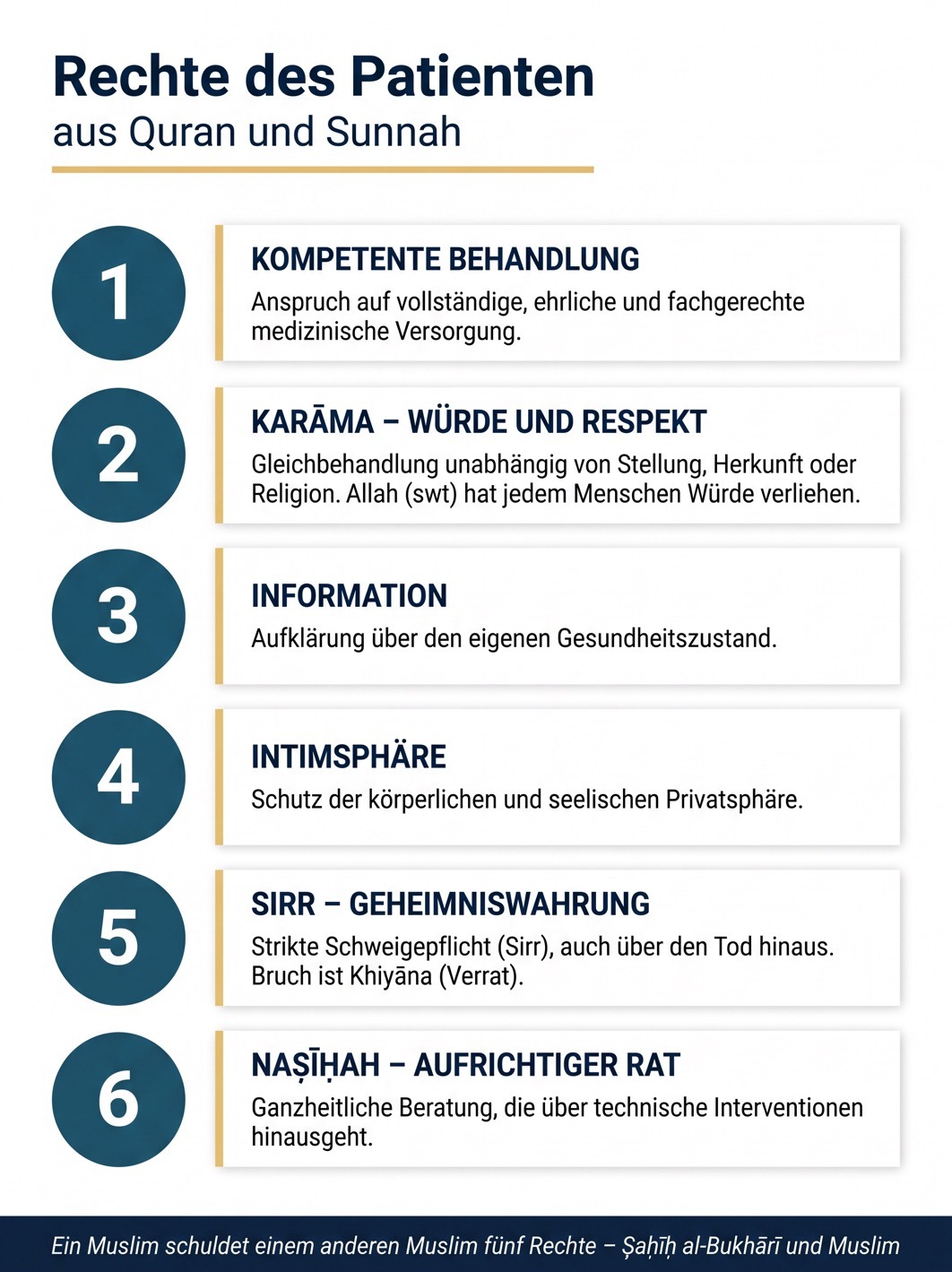
From Quran and Sunnah the classical Islamic tradition derives the following concrete patient rights:5 6
- The right to competent, complete and honest treatment
- The right to dignity and respect irrespective of social standing, origin or religion
- The right to information about one’s own state of health
- The right to protection of bodily and emotional privacy
- The right to confidentiality, in life and beyond death
- The right to sincere counsel, Naṣīḥah, that does not merely provide technical information but takes the human being’s lived reality seriously
Raḥma, equal treatment, Ṣabr: the distinctive attributes of the physician
From these rights follow directly the duties of the physician. Three of them are especially emphasised in the Islamic ethos.
Raḥma, mercy, is no communicative accessory to the medical craft. It is a disposition to which Allah سبحانه وتعالى expressly calls the believers, and which the Prophet ﷺ described as the bond of the community:
مَثَلُ الْمُؤْمِنِينَ فِي تَوَادِّهِمْ وَتَرَاحُمِهِمْ وَتَعَاطُفِهِمْ مَثَلُ الْجَسَدِ إِذَا اشْتَكَى مِنْهُ عُضْوٌ تَدَاعَى لَهُ سَائِرُ الْجَسَدِ بِالسَّهَرِ وَالْحُمَّى
The similitude of believers in regard to mutual love, affection, fellow-feeling is that of one body; when any limb of it aches, the whole body aches, because of sleeplessness and fever.
Sahih al-Bukhari 6011 and Sahih Muslim 2586 (muttafaq ʿalayh)
A physician who has a patient before him and does not truly perceive him wounds that bond. Raḥma cannot be administered within the seven minutes of an appointment. It is either present in one’s disposition or it is not.
Equal treatment is grounded theologically in Islam, not merely ethically. Every human being carries the Karāma, the dignity, that Allah سبحانه وتعالى has bestowed upon them. As early as the 9th century, ar-Rāzī formulated it explicitly: “He should treat patients equally, regardless of their wealth or social standing. The physician’s aim should not be the money he earns”.1 IMANA, the Islamic Medical Association of North America, founded in 1967 by American Muslims and today one of the internationally recognised reference bodies of Islamic medical ethics, states in its foundational document: “Muslim physicians are enjoined to treat all patients with loving care, as if they were members of their own family”.4 This holds for the homeless person as much as for the chief executive, for the one who cannot pay as much as for the private patient, for the non-Muslim as much as for the Muslim.
Ṣabr, patience, is the third virtue, and it bears directly on the demanding patient. Allah سبحانه وتعالى says in the Quran:
قُلْ يَـٰعِبَادِ ٱلَّذِينَ ءَامَنُوا۟ ٱتَّقُوا۟ رَبَّكُمْ ۚ لِلَّذِينَ أَحْسَنُوا۟ فِى هَـٰذِهِ ٱلدُّنْيَا حَسَنَةٌ ۗ وَأَرْضُ ٱللَّهِ وَٰسِعَةٌ ۗ إِنَّمَا يُوَفَّى ٱلصَّـٰبِرُونَ أَجْرَهُم بِغَيْرِ حِسَابٍ
Say, "O My servants who have believed, fear your Lord. For those who do good in this world is good, and the earth of Allāh is spacious. Indeed, the patient will be given their reward without account [i.e., limit]."
Sūra az-Zumar 39:10 (Sahih International)
Ar-Ruhāwī writes in his Ādāb aṭ-Ṭabīb that the physician should extend patience and forbearance also to the relatives and to all those who worry about the patient.7 To label someone inwardly as tiresome is the opposite of Iḥsān: the sincere, God-conscious excellence in action. It is an inner resignation before the encounter has even begun.
Even when the patient is the enemy, Salāḥ ad-Dīn and Richard the Lionheart
There is a historical scene that shows what the Islamic ethos prepares a person for, when conviction runs deeper than political enmity.
In the summer of 1192, in the midst of the Third Crusade, King Richard I of England, Richard the Lionheart, fell gravely ill with fever outside Acre.8 His forces had, shortly before, executed thousands of Muslim prisoners. Both sides were locked in a merciless war over the Holy Land.
Salāḥ ad-Dīn sent his enemy his personal physician, together with chilled fruit and ice brought down from the mountain regions.8 9 Baha ad-Din ibn Shaddad, Salāḥ ad-Dīn’s confidant, counsellor and eyewitness of the Crusade, records this gesture in his biography al-Nawādir al-Sulṭāniyya wa’l-Maḥāsin al-Yūsufiyya.10 The Latin Crusader chronicle Itinerarium Peregrinorum et Gesta Regis Ricardi likewise reports Saladin’s conduct towards the stricken king.11
This is no sign of weakness and no diplomatic manoeuvre. It is the expression of a loftiness of character that grows out of the Islamic ethos of medical care: that the sick person, regardless of who he is and what guilt he bears, possesses a right to treatment which cannot be suspended. Not by hatred, not by war, not by retribution. Salāḥ ad-Dīn did not do this in spite of his faith. He did it because of his faith.
Medical confidentiality, silence as an Islamic duty
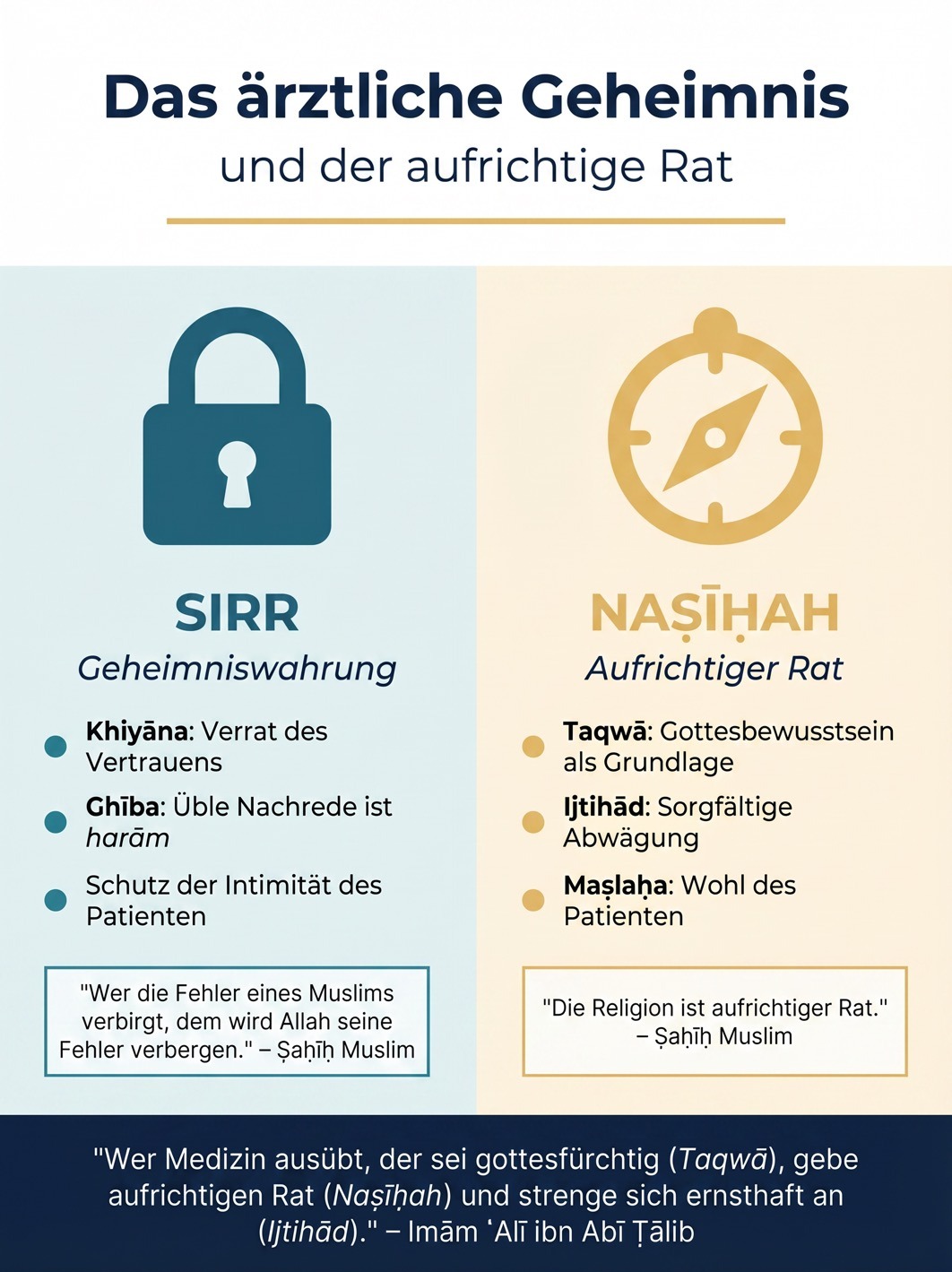
When a patient confides his secret to the physician, he enters, according to Islamic law, into a ʿaqd amāna, a covenant of trust. To break it is Khiyāna, treachery, and by the consensus of all four Sunni schools of law, treachery is a grave sin.12
The Arabic word sirr (secret) appears thirty-two times in the Quran in various forms.12 The same Amāna duty that Allah سبحانه وتعالى imposes on the believers in Sūrat al-Anfāl 8:27 also binds the physician: what is entrusted to him is guarded before Allah, not merely kept from the gossip circle of colleagues.
Ar-Rāzī articulated the practical dimension as early as the 9th century:
“The physician should deal gently with people, not speak ill of them in their absence, and safeguard their secrets. Many a person suffers from an illness which he hides even from the closest relatives, and discloses it, of necessity, only to his physician”.1
Three clear positions follow from this:
First: the duty of confidentiality does not end with the death of the patient. The clinical picture of the deceased is governed by the same rules as that of the living.12
Second: gossip about patients, whether in the doctors’ room, in the corridor or in the group chat, is Ghība, backbiting in absence, and counts among the gravest offences of character in Islam.13 There are six recognised exceptions to this prohibition. None of them reads: “because the patient was difficult”.13
Third: there are indeed situations in which silence may be broken, namely where there is a concrete and serious danger to the patient or to others.14
Naṣīḥah, sincere counsel as part of the physician’s ethos
It would, however, be wrong to reduce the doctor-patient relationship to silence and restraint alone. It also contains an active duty: Naṣīḥah, sincere and well-meant counsel.
Imām ʿAlī ibn Abī Ṭālib (ʿa) put it thus: “Whoever practises medicine, let him be God-fearing (Taqwā), give sincere counsel (Naṣīḥah) and strive earnestly (Ijtihād)”.15 Naṣīḥah is therefore no optional extra, but one of the three foundational duties of the physician.
What does this mean in practice? It means that the physician sees the patient as a whole, not merely the symptom that brought him into the consulting room today. It means that he speaks uncomfortable truths that the patient may not wish to hear but needs to. It means that he draws the patient’s life, his way of living, his burdens and his context into the treatment. The Islamic jurist al-ʿIzz ibn ʿAbd al-Salām wrote in the 13th century: “The aim of medicine is like the aim of the Sharia: to secure the benefit of people, to bring them safety and health, and to avert from them the harm of injury and illness as far as possible”.16 Maṣlaḥa, well-being, is comprehensive. It encompasses the body, the soul and the social life of the patient.
Counsel as a founding mandate
This obligation to Naṣīḥah is not least one of the reasons why we, as HAKIM e.V., the Council of Muslim Doctors and Healthcare Professionals, understand ourselves in exactly this way: as a professional and ethical platform that offers reasoned orientation, that counsels, that places things in context, for Muslim physicians, for patients, and for all who work in healthcare at the intersection of Islamic values and modern medicine.17
For counsel, Naṣīḥah, is no luxury. It is part of the Islamic ethos. And it is part of our mandate.
إِنَّ مِنْ خِيَارِكُمْ أَحْسَنَكُمْ أَخْلاَقًا
The best amongst you are those who have the best manners and character.
Sahih al-Bukhari 3559, Book 61, Hadith 68
In the end, the patient is not a case, not a billing code, not a burden. He is a human being to whom Allah سبحانه وتعالى has given dignity. He is a guest in the practice who comes because he is suffering. And he is an Amāna, for whose safekeeping we shall render account before Allah.