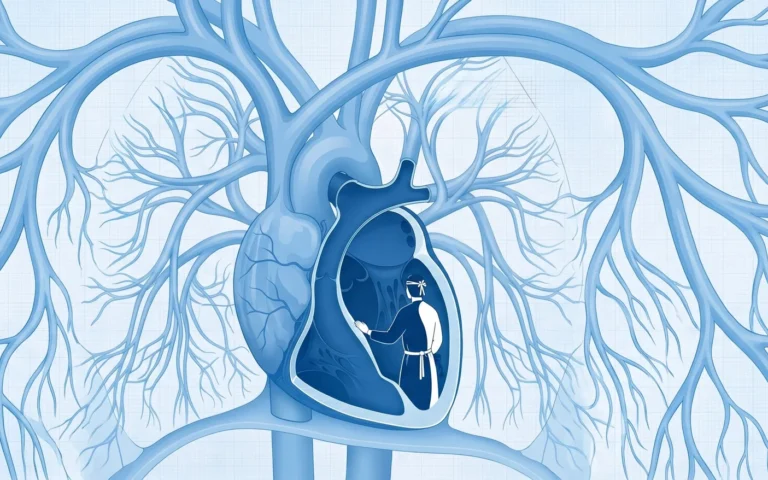
The reality for many Muslims in Germany toward the end of their lives very often looks like this: they must undergo prolonged hospital treatment or frequently die in hospital. Intensive care treatments are common, which is very distressing for both patients and their families. Furthermore, Muslims increasingly face diseases that, according to current medical-scientific opinion, are considered incurable. Or the diseases lead to death within a foreseeable timeframe. This emotionally difficult situation brings additional challenges that plunge Muslims into a dilemma regarding their religion. The challenges and the dilemma encompass questions of conscience related to Islam and reveal the affected Muslims lack of knowledge about the Islamic resolution of medical-ethical problems.
The advancement of medicine has over time produced many new ethical problems that did not previously exist. Modern medicine offers possibilities such as mechanical ventilation, organ donation, and artificial insemination. Furthermore, there are diverse treatment approaches for terminal diseases that are very aggressive. In contrast stands palliative care, which is considered a holistic treatment approach for seriously ill patients. It focuses on counseling patients and their families and usually involves symptom-relieving measures toward the end of life. Additionally, there is an increasing trend in the West toward active euthanasia, where seriously ill people wish for death but are no longer able to commit suicide themselves. Therefore, physicians are expected to induce death through medication.
Another challenge is the termination of mechanical ventilation for patients with severe brain damage. In Germany, either a living will is consulted or the presumed will of the patient is assumed. Ultimately, the patient’s will is decisive in this matter.
When it comes to these sensitive questions, Muslims are mostly helpless and do not know how to respond. They fear making a wrong decision and thus committing a sin. Many seek advice from their mosques and imams, who likewise have no expertise in these matters. Thus, Muslim patients and their families are usually left alone and must answer physicians about whether, for example, palliative treatment should be pursued or mechanical ventilation should be terminated. In most cases, a course of aggressive maximum therapy is chosen, so as not to make any mistakes.
This is precisely why I would like to elaborate on palliative therapy in the following and, in this context, present illness and death from an Islamic perspective.
Furthermore, I would like to outline the fundamentals regarding the question of when discontinuation or omission of treatment is permissible. In this context, I will briefly address the question of whether and under which circumstances the termination of mechanical ventilation is permissible.
The Islamic Concept of Illness
I would first like to address the Islamic concept of illness. An important understanding here is that both illness and healing come only from Allah swt.

Islamic Concept of Illness and Death
Medicine, physicians, and the technical devices available today are nothing more than means for Allah swt to bring healing. Medicine is never the cause of healing, although this belief is very widespread in the Western world among many people. From a spiritual perspective, it is very important for a Muslim during illness not to develop resentment or fall into deep grief, but rather to practice steadfastness.
عَجَبًا لِأَمْرِ الْمُؤْمِنِ إِنَّ أَمْرَهُ كُلَّهُ خَيْرٌ وَلَيْسَ ذَاكَ لِأَحَدٍ إِلَّا لِلْمُؤْمِنِ إِنْ أَصَابَتْهُ سَرَّاءُ شَكَرَ فَكَانَ خَيْرًا لَهُ وَإِنْ أَصَابَتْهُ ضَرَّاءُ صَبَرَ فَكَانَ خَيْرًا لَهُ
“How wonderful is the case of the believer; for him there is good in everything, and this applies only to a believer. If prosperity befalls him, he thanks Allah, and that is good for him; and if adversity befalls him, he endures it patiently, and that is better for him.”
Sahih Muslim 2999
Enduring illness offers the opportunity to receive great reward or the erasure of many sins. Therefore, in the case of both severe and mild illness, the Muslim must always be reminded that great reward awaits if they practice steadfastness.
مَا مِنْ مُسْلِمٍ يُصِيبُهُ أَذًى شَوْكَةٌ فَمَا فَوْقَهَا إِلَّا كَفَّرَ اللَّهُ بِهَا سَيِّئَاتِهِ كَمَا تَحُطُّ الشَّجَرَةُ وَرَقَهَا
Abdullah ibn Masud (RA) said: I visited the Prophet ﷺ when he was suffering from fever. I said: “You seem to be suffering greatly, O Messenger of Allah.” The Prophet ﷺ replied: “Yes, I suffer as much as two persons.” I asked: “Is that because you have a double reward?” He replied that this was so, and then said: “No Muslim is afflicted with any harm, even if it be the prick of a thorn or something more, but Allah expiates his sins thereby, just as a tree sheds its leaves.”
Sahih al-Bukhari 5648
Cursing or reviling a disease is not permissible, for illness can ultimately bring much good for the believer. As stated in a hadith:
لَا تَسُبِّي الْحُمَّى فَإِنَّهَا تُذْهِبُ خَطَايَا بَنِي آدَمَ كَمَا يُذْهِبُ الْكِيرُ خَبَثَ الْحَدِيدِ
Jabir (may Allah be pleased with him) reported: The Messenger of Allah ﷺ visited Umm Saib (or Umm Musaiyyab) and asked her: “What ails you, O Umm Saib? You are shivering.” She answered: “It is a fever, may Allah not bless it!” He said to her: “Do not revile fever, for it cleanses the sins of the children of Adam in the same way a furnace removes impurities from iron.”
Sahih Muslim 2575
Death and Islam
Death is taboo in the West and not present in people’s everyday lives. Although death is part of life and will inevitably occur, death plays no role in the life reality of many people, especially in the West. When one hears, for example, that someone has died, many people react: “What went wrong? Which doctor messed up?” Death seems to many people something unlikely and extraordinary, leading them to deal with it in this manner.
كُلُّ نَفْسٍ ذَائِقَةُ الْمَوْتِ وَإِنَّمَا تُوَفَّوْنَ أُجُورَكُمْ يَوْمَ الْقِيَامَةِ فَمَنْ زُحْزِحَ عَنِ النَّارِ وَأُدْخِلَ الْجَنَّةَ فَقَدْ فَازَ وَمَا الْحَيَاةُ الدُّنْيَا إِلَّا مَتَاعُ الْغُرُورِ
“Every soul shall taste death. And only on the Day of Resurrection shall you be paid your full recompense. Whoever is removed from the Fire and admitted to Paradise has indeed attained success. And the life of this world is nothing but the enjoyment of delusion.”
Surah Al Imran 3:185
From these words of Allah follows the Muslim’s striving for His pleasure and for a good death. The question that arises here is what constitutes a good death. Ultimately, death represents a bridge to the Hereafter, where the final abode determines whether the death is good or not. And this lies only with Allah swt.
لَا يَتَمَنَّيَنَّ أَحَدُكُمُ الْمَوْتَ مِنْ ضُرٍّ أَصَابَهُ فَإِنْ كَانَ لَا بُدَّ فَاعِلًا فَلْيَقُلِ اللَّهُمَّ أَحْيِنِي مَا كَانَتِ الْحَيَاةُ خَيْرًا لِي وَتَوَفَّنِي إِذَا كَانَتِ الْوَفَاةُ خَيْرًا لِي
“None of you should wish for death because of a misfortune that has befallen him; but if he must wish for death, he should say: O Allah! Keep me alive as long as life is better for me, and let me die if death is better for me.”
Sahih al-Bukhari 5671
The Muslim accordingly wishes for certain circumstances that increase hope that Allah swt will forgive them and thus allow entry into Paradise. These circumstances include the following: Death occurring after a good deed or in a state of obedience to Allah swt. Speaking the Shahada. No outstanding debts. No missed prayers. Performing Tawbah. Ideally fulfilling one of the categories of Shaheed. The Muslim thus wishes, toward the end of life in a state of severe illness, to improve their spiritual relationship with Allah swt and asks for forgiveness of sins. They wish to do as much good as possible to rise in favor with Allah swt.

Circumstances of a Good Death in Islam
Palliative Therapy
When a Muslim with a terminal disease and significantly limited life expectancy lies in a German hospital, they are very often overwhelmed by physicians presenting the option of palliative therapy. The first challenge for the patient and their family is to understand what palliative therapy is and whether this type of therapy is even permissible in Islam.
Therefore, I will first explain what palliative therapy involves.
Palliative medicine is a medical specialization for people living with a serious illness. The goal is not primarily to treat the patient’s disease with aggressive therapy and its many side effects, but rather to offer the patient psychological support and treat their symptoms so that their quality of life is improved. Here, the patient’s needs are at the center, not the diagnosis. Palliative therapy can be provided at any age, at any stage of a serious illness, and even alongside curative treatment.
Within palliative therapy, various areas must be addressed. In addition to pain management, spiritual problems, social problems, and psychological problems of the patient must be addressed. An interdisciplinary team of different professional groups is needed for this. Physicians, specialized nurses, social workers, and chaplains are indispensable for ensuring palliative care.
Now we return to the Muslim with a terminal disease, for example metastatic bronchial carcinoma. They are presented with the choice of undergoing another aggressive chemotherapy or choosing palliative therapy, with physicians considering the chances of cure or improvement through chemotherapy to be low. In this situation, many Muslims choose the aggressive chemotherapy because they believe that from an Islamic perspective, one must do everything possible. Furthermore, the question arises whether, in the event of cardiac arrest, resuscitation via chest compressions should be performed and whether mechanical ventilation in the intensive care unit is desired. Here too, many Muslims choose these options because they believe Islam requires them to do so.
Islamic Perspective: When Is Treatment Obligatory?
Therefore, I would like to discuss whether a patient has permission under Islamic law to refuse treatment and under which circumstances it is permitted to refuse treatment. Additionally, the question of when medical treatment is obligatory will be addressed.

Algorithm: Medical Treatment in Islam
Generally, it is not obligatory in Islam for a Muslim to seek medical treatment. There are ahadith that serve as evidence for this.
يَدْخُلُ الْجَنَّةَ مِنْ أُمَّتِي سَبْعُونَ أَلْفًا بِغَيْرِ حِسَابٍ قَالُوا وَمَنْ هُمْ يَا رَسُولَ اللَّهِ قَالَ هُمُ الَّذِينَ لَا يَكْتَوُونَ وَلَا يَسْتَرْقُونَ وَعَلَى رَبِّهِمْ يَتَوَكَّلُونَ
Muslim narrated from Imran ibn Husain that the Prophet ﷺ said: “Seventy thousand from my Ummah shall enter Paradise without reckoning.” They asked: “Who are they, O Messenger of Allah?” He answered: “They are those who do not seek healing through ruqya, do not follow superstitions, do not cauterize their skin for healing, and place their trust in their Lord.”
Sahih Muslim 218
إِنِّي أُصْرَعُ وَإِنِّي أَتَكَشَّفُ فَادْعُ اللَّهَ لِي قَالَ إِنْ شِئْتِ صَبَرْتِ وَلَكِ الْجَنَّةُ وَإِنْ شِئْتِ دَعَوْتُ اللَّهَ أَنْ يُعَافِيَكِ
Al-Bukhari also narrated from Ibn Abbas, who said: This dark-skinned woman came to the Prophet ﷺ and said: “I suffer from epileptic seizures and become exposed during them, so make dua to Allah for me.” The Prophet said: “If you wish, be patient and Paradise shall be yours! And if you wish, I will ask Allah to heal you.” She said: “I will be patient!” And she continued: “But I become exposed, so ask Allah that it does not happen!” So he made dua for her.
Sahih al-Bukhari 5652
These two ahadith indicate that it is permitted to refuse medical treatment. At the same time, however, the Messenger ﷺ encouraged seeking treatment through ruqya.
الشِّفَاءُ فِي ثَلَاثَةٍ شَرْطَةِ مِحْجَمٍ أَوْ شَرْبَةِ عَسَلٍ أَوْ كَيَّةٍ بِنَارٍ وَأَنْهَى أُمَّتِي عَنِ الْكَيِّ
“Healing lies in three things: in the incision of a cupper, in a drink of honey, and in cauterization by fire. However, I forbid my Ummah from cauterization.”
Sahih al-Bukhari 5681
In the second hadith, the Messenger ﷺ left it to the dark-skinned woman to choose between enduring her epilepsy, for which Paradise was promised to her, and a dua spoken by the Prophet to Allah for her healing. After examining all source texts and their interpretation according to Islamic legal criteria, one concludes that medical treatment is desirable but not obligatory.
However, cases must also be considered where the patient cannot express consent or refusal regarding a therapeutic measure and the patient would die without therapy. Furthermore, hypothetically a therapy would be available that would save the patient’s life. In this case, physicians are obligated to carry out the therapy.
An example the scholars cite is: A man chokes so that his airways are blocked. By administering a liquid, the airways are cleared. Another example is induced vomiting after accidentally ingesting a toxic substance. Intravenous fluid administration after dehydration is also cited as an example.
Therefore, one cannot generally assume that all medical treatment is merely desirable but not obligatory. This would be a reduction of the general permission to forgo medical treatment to all possible cases.
Principles of the Sharia on the Subject of Treatment
In general, the assessment is derived from the following principles that stem from the Sharia:
- Preserving life
- Alleviating suffering
- No default obligation of treatment
- Building on defined obvious characteristics to achieve consistency
- Building on high probability while considering the objectives of the Sharia
- Doing no harm and weighing benefit against harm
- No enforcement of treatments in general
- Consideration of priorities
The scholars formulated in this context that medical treatment becomes obligatory when life is threatened or the body could suffer major functional damage and a therapy is available that with a probability of over 50% would, by Allah’s will, bring about healing. Generally, a therapy is prohibited under Islamic law if the therapy would with over 50% probability cause severe functional damage to the body or cause death. If the harm of a therapy outweighs the benefit, then therapy is also not obligatory in this case.
Practical Examples
The first example is a myocardial infarction. The patient has chest pain and ST-elevations are detected via ECG. This leads to a diagnosis of myocardial infarction with acute danger to life. Furthermore, a treatment option exists via coronary angiography with stent implantation, which has a success rate of over 50%. In this case, it is obligatory for the Muslim to undergo the therapy, as life is acutely threatened and a therapy is available with over 50% probability of success, with no significant harm. The benefit clearly outweighs.
The second example involves a patient with metastatic bronchial carcinoma. The physicians offer chemotherapy that could, with a probability of under 50%, save the patient’s life for up to a year. In this case, chemotherapy would not be obligatory, as the probability of success is under 50%, even though life is acutely threatened. In this example, another component comes into play: the harm of therapy. Aggressive chemotherapy unfortunately not only has the desired therapeutic effect but also acts against the body’s own cells. Chemotherapies must sometimes be discontinued or terminated due to severe side effects.
In light of this, it would be permissible for the Muslim to forgo chemotherapy and opt for palliative treatment. This would relieve pain as much as possible and allow the improvement of the relationship with Allah swt – that is, to significantly improve the spiritual state so that, in sha Allah, death will be a good death.
Cardiopulmonary Resuscitation
Now I come to the topic of cardiopulmonary resuscitation and the Islamic perspective on whether it is permissible for a Muslim to decline resuscitation in advance. When cardiac arrest occurs, there is the option of performing resuscitation through chest compressions. The success of chest compressions depends on several factors:
- The general health status of the patient
- The age of the patient
- Timing of resuscitation after onset of cardiac arrest
- Whether laypersons or trained medical personnel perform the resuscitation
The success rate of chest compressions is approximately 12%. This figure is also due to the fact that over 70% of chest compressions take place in home settings and are performed by laypersons. It is assumed that resuscitation by trained medical personnel in hospital is significantly more effective. Given that cardiac arrest without treatment would with near certainty lead immediately to death, it is an Islamically legally compliant opinion that medical professionals are obligated to perform chest compressions with further measures. Chest compressions should, from an Islamic perspective, be omitted by medical professionals when, from a medical standpoint, chest compressions would be more or less futile. Futility is determined by the patient’s health status. A cancer patient with metastases or an elderly chronically ill patient with known coronary heart disease are patients for whom physicians would forgo chest compressions.
The practice in Germany of asking every patient whether they would like to decline chest compressions in case of emergency is, from an Islamic perspective, not permissible, as the patient does not have the authority to decline. Physicians must decide according to the patient’s health status and the circumstances of the cardiac arrest whether chest compressions should be performed or not.
Mechanical Ventilation
Finally, we address the termination and withholding of mechanical ventilation. If the patient’s life is acutely threatened and mechanical ventilation would with a probability of at least 50% save the patient’s life, then initiating or continuing mechanical ventilation is obligatory under Islamic law. If the prospects for success are below 50%, then the termination or withholding of mechanical ventilation is permissible under Islamic law.
Today it is possible to ventilate patients artificially for a very long time. For patients with irreversible brain damage or who are brain-dead, there are controversial debates in the West about whether ventilation should be terminated. Many speak of a life not worth living. Furthermore, according to current expert opinion, there is no hope of improvement or recovery. This highly complex situation puts Muslims in a predicament to make an Islamically compliant decision. The scholars view this situation such that first, the patient who requires continuous mechanical ventilation is no longer a Mukallaf. The patient is in a state of continuous unconsciousness, unable to fulfill Islamic obligations. Furthermore, they are unable to perform any actions or movements. Life resembles not life, but a state between life and death.
In light of this, some scholars consider it permissible to terminate mechanical ventilation when the patient is in a persistent vegetative state with no hope of improvement. This must be confirmed by physicians. Then it is permissible – that is, allowed – to terminate mechanical ventilation. On one hand, mechanical ventilation would be futile, and on the other, the harm from complications of mechanical ventilation would outweigh the benefit.
Summary

End of Life Decision Guide
I summarize this complex set of questions to make it comprehensible. Medical treatment is obligatory when life is acutely threatened and the therapeutic measure could save the patient’s life with at least a 50% probability. The decision to forgo chest compressions can only be made by physicians. It may be forgone when, from a medical standpoint, treatment would most likely be futile. The termination of mechanical ventilation is permitted when the patient is brain-dead or in a persistent vegetative state.
Dealing with Death
In conclusion, it is important for us Muslims to answer the sensitive questions with Islam and thus always strive for His pleasure. At the end of life, the sick person and their family need much support and pastoral care. Practical help in the form of nursing and pain relief, as well as spiritual support, are needed to ease the severe trial for all involved. Unfortunately, the sterile atmosphere in hospitals with their often unempathetic healthcare professionals does not offer satisfactory services for any patients, but especially for Muslims, to adequately compensate and receive spiritual support. Ideally, in the future there will be Muslim chaplains who can provide families with spiritual support in tragic situations as well as Islamic legal guidance to make grave decisions regarding treatment.
At the end of my text, I would like to address dealing with death. When the patient or a relative dies, it is essential for the physician as well as the relatives to offer condolences and grieve according to Islam.
The physician should offer comfort while reminding that we all belong to Allah and that death is inevitable. Furthermore, prayers should be made for the deceased Muslim that Allah forgives them. For the relative, the same applies, but the priority lies in maintaining Sabr. It is difficult to describe all the components of condolence and mourning. Rather, I close with the words of the Prophet ﷺ when he wrote a letter to his companion Muadh bin Jabal when his son passed away. For his words express the essence of offering comfort and fill it with life.
“In the name of Allah, the Most Gracious, the Most Merciful. From Muhammad, the Messenger of Allah, to Muadh bin Jabal. Peace be upon you! First and foremost, I praise Allah, beside whom there is no god. Then I pray that Allah grants you a great reward for this loss and bestows upon you patience and steadfastness and gives you and us the courage to be grateful to Him for His blessings. Indeed, our lives and those dear to us are sacred gifts from Allah, who has only entrusted them to us temporarily. He let us benefit from these gifts for as long as He wished and took them back whenever He wished. And in return for this (apparent loss), He will bless you with higher rewards of His special favor, mercy, and guidance, provided you show steadfastness for His sake and for the benefits of the Hereafter. Therefore, I advise you to have patience. Do not allow your lamenting to destroy your rewards in the Hereafter and plunge you into regret. Be certain that no amount of wailing has ever brought back the dead, nor can it help remove grief and sorrow. Allah’s will always prevails, indeed it has already been done!”
Narrated regarding the letter of the Prophet ﷺ to Muadh bin Jabal