
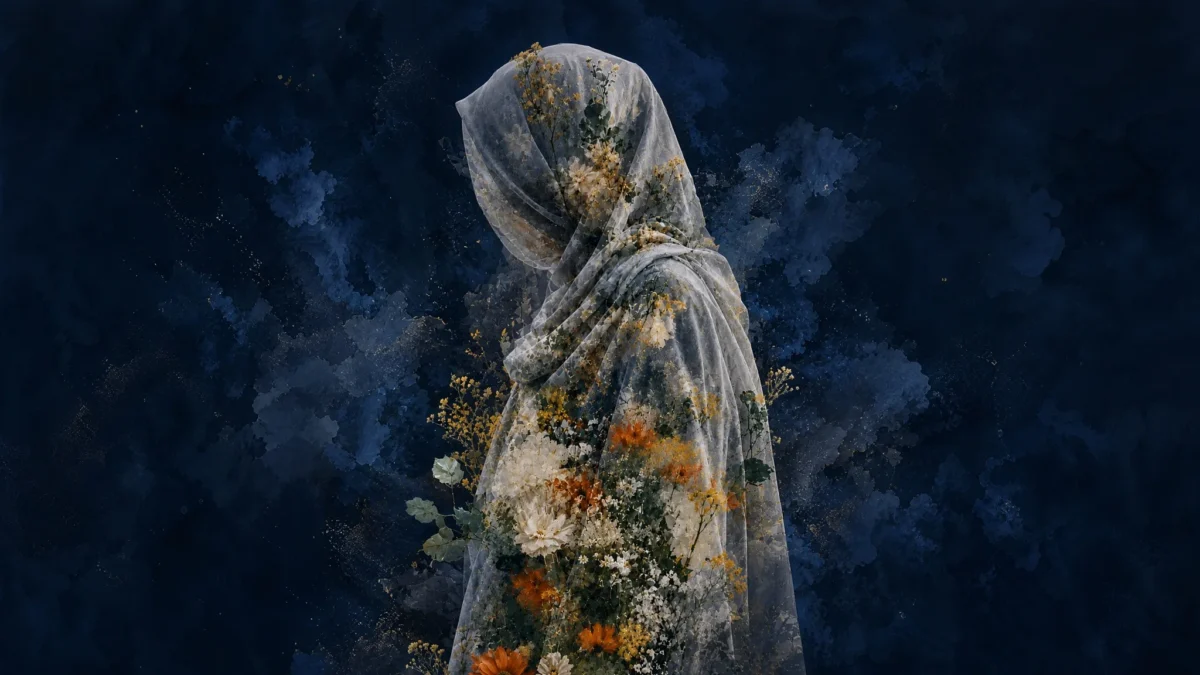
Her birth name was Laila. Yet everyone called her only “Al-Shifa,” the Healing.
Al-Shifa was among the first Muslim women and emigrated early to Medina. She could do something that almost no one could in those days, neither men nor women: read and write. With this she became one of the first teachers of Islam. The Prophet ﷺ even entrusted his wife Hafsa to her, so that she might teach her writing. That same Hafsa later safeguarded a complete written copy of the Qurʾan.
She was, moreover, well versed in the treatment of skin diseases. Her knowledge was so well regarded that the Prophet ﷺ asked her to pass it on: “Will you not teach Hafsa the treatment against an-Namla, just as you taught her writing?” Her healing art was not merely tolerated, but expressly desired.
Remarkable, too, is her public role. According to tradition, Caliph ʿUmar ibn al-Khattab entrusted to her a supervision over the market of Medina, where she is said to have watched over honest trade. Some sources cite this as one of the first public offices entrusted to a woman in Islam; the reports about it, however, are not unanimous. What is certain is that Ibn Hajar al-ʿAsqalani counted her among the most intelligent women of her time.
We know the names of many famous figures. But the woman whose name means “Healing” is hardly known to anyone today.
وَنُنَزِّلُ مِنَ ٱلْقُرْءَانِ مَا هُوَ شِفَآءٌ وَرَحْمَةٌ لِّلْمُؤْمِنِينَ
“And We send down of the Qurʾan that which is a healing and a mercy for the believers.”
Sūrat al-Isrāʾ (17:82)
Skill and faith belong together
Through Al-Shifa one understands that knowledge, the healing arts, and faith belonged together in early Islam. She taught people to read, so that they could understand the Qurʾan, and she treated the sick. For her there was no division into “worldly” and “religious.” To be a good Muslim woman meant to serve people with what one had mastered. It is precisely this union of skill and faith that the healing professions seek to this day.