
More than a thousand years before the world knew the name Florence Nightingale, there lived in Medina a woman who did precisely what we today call nursing.
Rufaida grew up as the daughter of a physician. From her father she learned to clean wounds, dress them, and ease fevers. She made of this knowledge not a business, but a service.
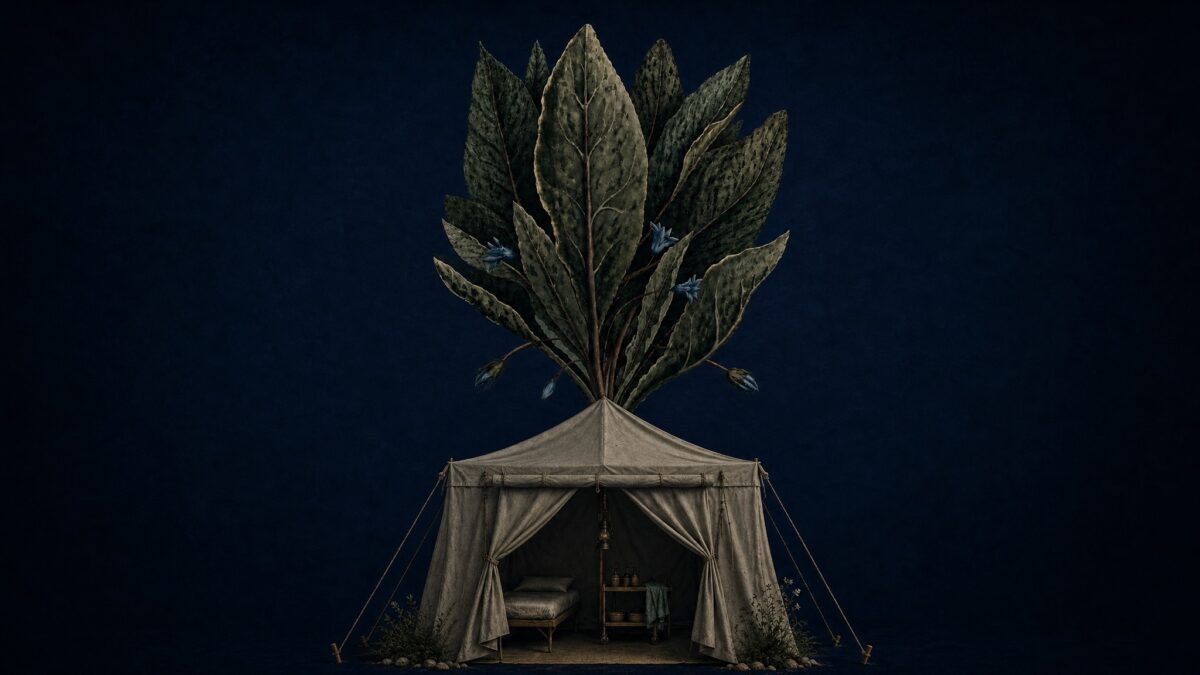
Right beside the Mosque of the Prophet ﷺ she pitched a tent, equipped with bandages, herbs, water, and everything the sick might need. It was the first care tent in Islamic history. Whoever was injured was brought to Rufaida.
When the close companion Saʿd ibn Muʿadh was struck in the arm artery by an arrow at the Battle of the Trench, the Prophet ﷺ had him brought into a tent in the mosque so that he could visit him close at hand. It was, as the Sīra reports, Rufaida’s tent. One of the most important men of the young community was placed into her hands.
Rufaida did not go to the field alone. She trained a whole group of women as nurses and led them. For her work she received from the Prophet ﷺ a share of the spoils as large as that of a fighting soldier. Nursing was thereby placed on a par with combat.
Her true work, however, lay in quiet, between the battles. She cared for the orphans, the poor, and people with disabilities. She taught cleanliness, went to the forgotten, and passed on her knowledge. Medicine was for her nothing reserved for the rich. Her tent stood open to everyone.
A woman built the first nursing station of Islam 1,400 years ago. In Bahrain a nursing prize is still named after her every year to this day. Among us, hardly anyone knows her name. And yet the history of Muslim nursing begins with her and a tent beside the mosque.
وَمَنْ أَحْيَاهَا فَكَأَنَّمَآ أَحْيَا ٱلنَّاسَ جَمِيعٗا
“… and whoever saves a life, it is as though he had saved the lives of all mankind.”
Sūrat al-Māʾida (5:32)
Translating compassion into structure
Through Rufaida one understands how closely Islam binds faith and the healing arts together. To care for the sick is regarded here not as a lowly service, but as compassion lived out. The Prophet ﷺ compared the believers to a single body: when one limb suffers, the whole body suffers with it, sleepless and feverish. Rufaida did not merely believe this saying; she organised it. Out of compassion she made a tent, a team, and a system. That is precisely the task of the healing professions to this day.