
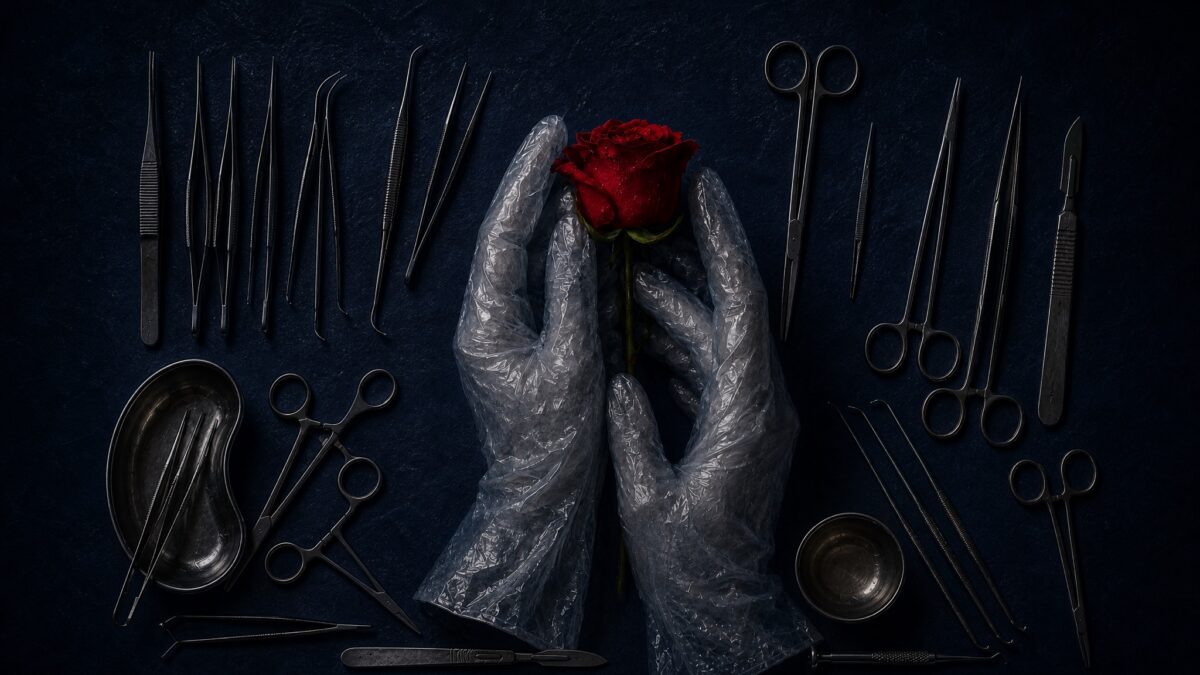
A man comes to Medina. He has never seen the Prophet ﷺ before. He is a physician, skilled with his hands, and he knows how to cut. When he catches sight of the Seal of Prophethood between the shoulders of the Prophet ﷺ, he takes it for a growth. His physician’s eye takes over, and he offers what a physician offers: “Show me that on your back. I am a physician, let me cut it out and treat it.”
The reply of the Prophet ﷺ is one of the most beautiful sentences passed down to us as healers.
اللَّهُ الطَّبِيبُ بَلْ أَنْتَ رَجُلٌ رَفِيقٌ طَبِيبُهَا الَّذِي خَلَقَهَا
“Allah is the Physician. You are but a gentle helper. Her physician is the One who created her.”
Sunan Abī Dāwūd 4207 (ṣaḥīḥ)
This account is reported on the authority of Abū Rimtha at-Tamīmī, a Companion from the tribe of Tamīm. The great historian of medicine Ibn Abī Uṣaybiʿa lists him in his work on physicians as a healer from the time of the Prophet ﷺ who had mastered the manual work and craft of surgery. In the chains of transmission the name appears sometimes as Abū Rimtha, sometimes as Ibn Abī Ramtha, and in one version it is the father who makes the offer. The core, however, is the same in every version.
You have to listen closely to what the Prophet ﷺ says and what he does not say. He does not say: “You are no physician, keep your hands off medicine.” On the contrary, he confirms the skill of the hand. He only places it in its right order. The human being is rafīq, the gentle, skilled companion. The Healer is Allah taʿālā. This very distinction is the whole identity of the Muslim physician. We treat, we apply the means, the sabab, and the healing belongs to Allah. It is the sentence that Ibrāhīm ﷺ speaks in the Quran.
وَإِذَا مَرِضْتُ فَهُوَ يَشْفِينِ
“and when I am ill, it is He who cures me.”
Sūrat ash-Shuʿarāʾ (26:80)
This has been the stance of the community from the very beginning. The first generation did not despise medicine; they sought it out and honored the skill of the hand. And at the same time they put the physician in his right place, under Allah, not in His place. The art of healing was welcome. Arrogance never was.
Medicine against two illnesses
For us this one sentence is medicine against two illnesses at once. Against pride when the treatment succeeds, for we were only the rafīq. And against despair when it fails, for the physician was another all along. We give the utmost in care and skill. The outcome we place in the hand of the One who created the body.