
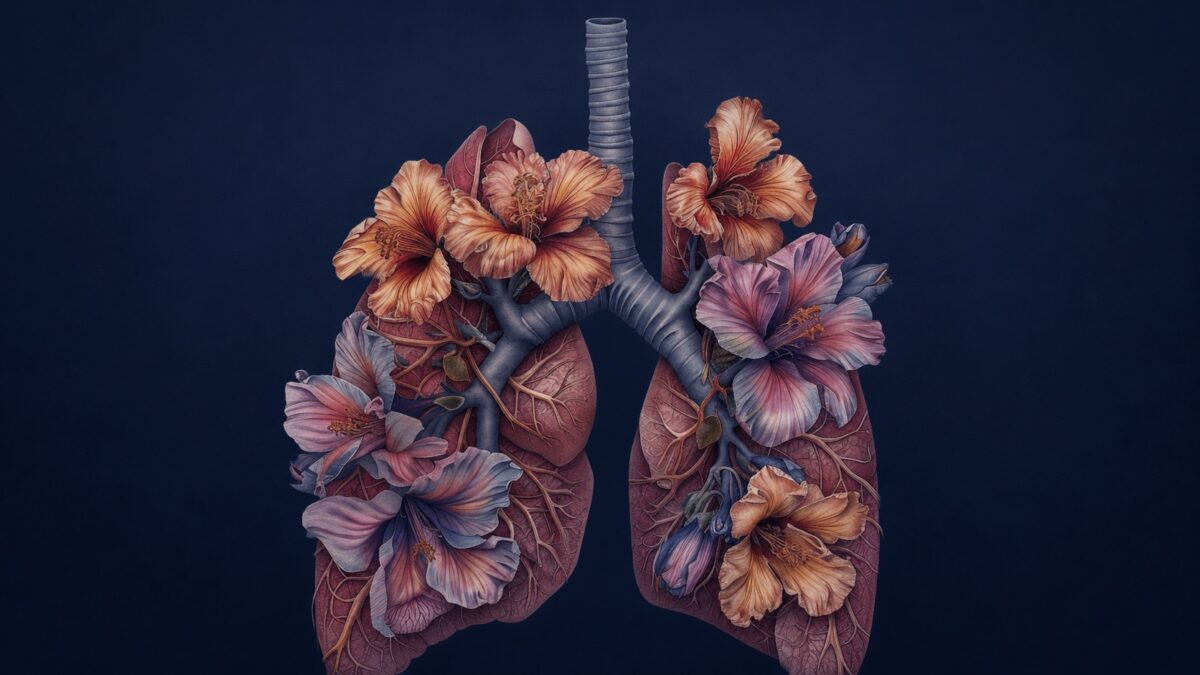
Three hundred years before Europe came to it, a physician in Cairo opened the textbook of Ibn Sīnā. There it said that the blood flows through invisible pores in the septum of the heart from the one chamber into the other. Ibn an-Nafīs contradicted it.
“There is no such passage. The substance of the heart here is dense and solid. The blood must take another path, from the right chamber through the lung and only from there into the left.”
Ibn an-Nafīs, Sharḥ Tashrīḥ al-Qānūn
This is the pulmonary circulation, described in Cairo, then forgotten for centuries, until an Egyptian physician rediscovered the manuscript in a Berlin library in 1924.
Ibn an-Nafīs, born in 607 after the Hijra near Damascus, studied at the Nūrī Bīmāristān of his home city and later became chief physician at the Manṣūrī hospital in Cairo. But he was not only a physician. He was a respected jurist of the Shāfiʿī school. So much so that the biographer as-Subkī lists him in his standard work on the Shāfiʿī jurists. He wrote a commentary on a work of law and a theological-philosophical novel, ar-Risāla al-Kāmiliyya.
This is precisely the point. In one man, Fiqh and medicine flowed from a single source. Ibn an-Nafīs did not see the study of the body and the study of revelation as two separate careers. Both were ʿilm, both were the reading of that order which Allah has placed in creation. And the training that made him a careful jurist gave him at the same time the courage to correct Galen and even Ibn Sīnā. For as a Faqīh he was trained to follow the proof, the dalīl, and not the mere standing of an authority.
At the end of his life he endowed his house, his books, and everything he owned to the Manṣūrī hospital. A sentence that suits him is transmitted in this connection: “The candles of knowledge must keep burning even after my death.” That is Waqf lived out. Knowledge that one does not keep to oneself but passes on as a lasting inheritance for those who come after.
No contradiction between faith and knowledge
Ibn an-Nafīs is the answer to anyone who claims that faith and science pull in different directions. With him it was the same discipline that made him a conscientious jurist and a fearless anatomist. Between the prayer mat and the dissecting table there stood for him no wall. It was one and the same path to knowledge.